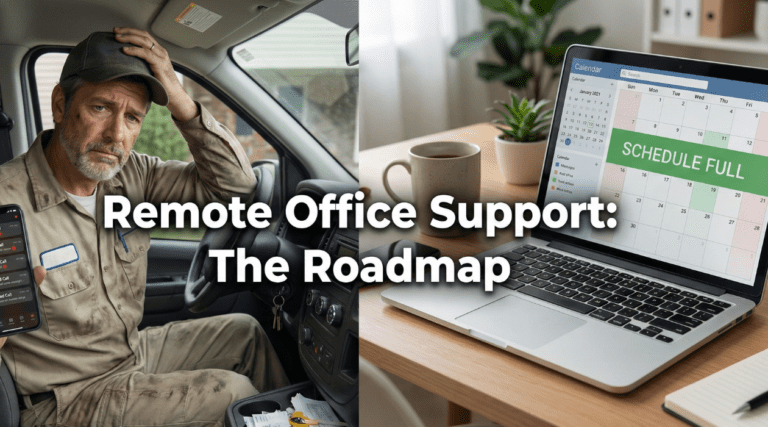
Contractor Profit Tracking: 5 Vital Secrets to Stop Losing
You are busy, booked, and still somehow not seeing the money you thought you earned. You finish the roofing job, answer the after-hours plumbing call, squeeze in the extra HVAC repair, and then wonder why your bank balance still feels weak. You are selling work, but your profit keeps slipping through cracks you cannot see.
Contractor Profit Tracking is not a finance hobby. It is how you figure out whether your business is actually working. If you have ever looked at a packed week and still felt cash-strapped, you already know the problem. If you have ever closed a month thinking you did fine, then got hit with ugly numbers after payroll, materials, and callbacks, you are not tracking profit. You are guessing.
There is a better way to handle this. You need to stop treating profit like something you discover at tax time and start treating it like something you monitor while the work is happening. Your business is not losing money by magic. It is losing money through missed details, weak handoffs, delayed paperwork, and bad visibility.
The Real Cost of Not Knowing Your Numbers
When you think about Contractor Profit Tracking, you might picture spreadsheets, bookkeeping reports, or some dry accounting process you will get to later. That is exactly why profit problems keep growing. Contractor Profit Tracking is not about becoming an accountant. It is about knowing, in plain English, whether the jobs on your schedule are helping you win or quietly dragging you under.
If you run a small field service company, your margin can disappear fast. One underpriced electrical service call. One missed material charge on a garage door install. One commercial cleaning job with labor hours that went way over estimate. If you are not watching the numbers closely, those small misses stack up and turn a busy month into a frustrating one.
Contractor Profit Tracking without a consistent system creates blind spots everywhere. You start confusing revenue with success. Your team stays busy, but your stress gets worse. You feel like you should be doing better by now, and you are right. The issue is not always effort. The issue is visibility.

Why Office Sloppiness Kills Your Margin
Most profit leaks do not start in the field. They start in the office. If your estimate lives in one place, your technician notes live somewhere else, and your invoice gets built later from memory, your numbers are already compromised. You cannot measure what the job earned if the job record is messy from the beginning.
This is where Eliminating Duplicate Data Entry matters more than most owners realize. If your tech writes labor and materials on paper, then somebody in the office retypes them into QuickBooks, then somebody else copies parts into a customer summary, you have created a perfect setup for bad profit data. Every extra re-entry opens the door to missed charges, wrong hours, and inconsistent records.
Eliminating Duplicate Data Entry gives you cleaner job files and cleaner job files make Contractor Profit Tracking possible. If the estimate, work performed, materials used, and final invoice all line up, you can actually see what happened. If they do not line up, you are staring at noise and calling it reporting.
For HVAC, plumbing, pest control, roofing, electrical, commercial cleaning, appliance repair, and water damage restoration companies, this gets expensive fast. A dispatcher enters one labor number in ServiceTitan. The office changes it later in QuickBooks. A technician texts in extra materials after the invoice is already sent. Then you try to review profitability at the end of the month and wonder why nothing makes sense. Contractor Profit Tracking breaks when the record itself is unreliable.
That is why Contractor Profit Tracking starts upstream. It starts with one clean version of the job, one process for closeout, and one person making sure the details are complete before billing moves forward. Profit is not just lost on the job site. It is lost when your office makes the same job harder to understand every time it changes hands.
Software Will Not Save Bad Oversight
A lot of owners try to fix weak numbers by buying more tools. New dashboards. New reports. New integrations. More notifications. The problem is not always a lack of software. The problem is usually that nobody is consistently reviewing the information, cleaning it up, and making sure the file reflects reality.
That is where Human Support vs Technology becomes painfully obvious. Technology can store job data. It can send invoices. It can flag open balances. But it cannot think through a messy handoff, chase missing details from a technician, or notice that a profitable-looking job is actually missing disposal fees, permit charges, or follow-up labor. Contractor Profit Tracking needs a human brain involved.
Human Support vs Technology is not an either-or argument. It is a reality check. You use the software for storage and structure. You use real people for judgment, consistency, and follow-through. If nobody owns the details, then Contractor Profit Tracking turns into another report you ignore because you do not trust the numbers anyway.
For YROS clients, this is where the fog starts lifting. A real person reviews what happened, checks whether the invoice matches the work, makes sure notes are complete, and closes gaps before they become profit leaks. That kind of support matters because Contractor Profit Tracking only works when the records are clean enough to tell the truth.
Workflow Efficiency Hacks That Protect Real Profit
You can stop a lot of margin loss by tightening a few repeatable habits. The best Workflow Efficiency Hacks are usually boring, which is exactly why they work. They reduce confusion, speed up closeout, and make Contractor Profit Tracking easier because the records stay clean while the work is fresh.
One of the smartest Workflow Efficiency Hacks is same-day job closeout. If your plumbing tech finishes a water heater install at 2 p.m., the labor, materials, photos, and notes should be complete before that job fades into the background. Waiting until later makes details softer. Softer details lead to weaker invoices. Weaker invoices lead to bad numbers.
Another strong move is to standardize what gets documented before a job can be marked complete. Workflow Efficiency Hacks like before-and-after photos, labor confirmation, material verification, and written scope changes make Contractor Profit Tracking more accurate because they reduce guesswork later.
Here are a few Workflow Efficiency Hacks that make a real difference:
- Close technician notes before the next dispatch begins
- Match material usage to the approved estimate on the same day
- Require photos before final billing review
- Flag extra work immediately instead of remembering it later
- Review incomplete files daily, not weekly
- Give one person ownership of billing accuracy
None of this is flashy. That is the whole point. Contractor Profit Tracking gets easier when your process is repetitive, clean, and hard to mess up.
The Weekly Profit Review You Keep Avoiding
If you only check profit at the end of the month, you are already late. By then, the missed charges, extra labor, supplier overages, and unpaid add-ons have had weeks to pile up. Contractor Profit Tracking works best when you review job performance while there is still time to fix the issue.
Your review process does not need to be fancy. It needs to happen. Pull the jobs closed that week. Compare estimated labor to actual labor. Check whether materials were billed correctly. Look for scope changes that never made it to the invoice. This is where Contractor Profit Tracking shifts from theory to control.
A simple weekly review can include:
- Compare estimate totals to final invoice totals
- Check actual labor hours against planned hours
- Review material usage for missing charges
- Catch callbacks tied to the original job
- Flag jobs with weak notes or incomplete closeout
- Assign follow-up before the week ends
Skip this and Contractor Profit Tracking turns into hindsight. You are not managing profit at that point. You are discovering losses after they are already baked in.

Not Every Profit Leak Looks the Same
Not all margin problems come from one place. That is why Contractor Profit Tracking needs categories. If you lump every issue together, you end up blaming pricing when the real problem is sloppy closeout, or blaming labor when the real issue is unbilled materials.
A simple way to think about Contractor Profit Tracking is to sort leaks by type:
- Pricing leak: the job was underpriced before work even started
- Labor leak: the crew took longer than expected
- Material leak: parts, supplies, or disposal charges never got billed
- Process leak: notes, approvals, or add-ons were incomplete
- Callback leak: the original job created unpaid return work
This matters because Contractor Profit Tracking gets useful only when you know what keeps hurting you. If plumbing jobs are losing margin because your team forgets to capture extra parts, that is a different fix than an HVAC company that keeps bleeding profit through callbacks. Different leak, different solution.
Once you categorize the issue, patterns show up faster. And when patterns show up, you can finally stop reacting and start tightening the right part of the business.
In the Wild: Busy Does Not Mean Profitable
In the Wild: Consider a roofing contractor we will call Mike. Mike stayed slammed all spring. His crews were moving, estimates were going out, and the phone kept ringing. From the outside, things looked solid. Inside, he was constantly tense because the checking account never matched the workload.
He did not have real Contractor Profit Tracking in place. He had rough estimates, scattered receipts, and delayed invoices. Labor got reviewed late. Dump fees were missed. Small material runs never made it onto the final bill. By the time he looked at the numbers, the month was over and the damage was already done.
One commercial repair job made the problem obvious. The roof work stretched an extra day because access was slower than expected, but no one updated the labor picture in the office. Extra cleanup supplies were used, but they were not added cleanly. The invoice still went out. The customer paid. Mike thought the job was fine. Two weeks later, after payroll and supplier payments, he realized the job barely made money. That is the trap. Revenue showed up. Profit did not.
In the Wild: Now look at a plumbing company we will call Devin. Friday at 5:10 p.m., the crews were wrapping up, the office was fried, and Devin was trying to finish payroll in QuickBooks before heading home. A property manager had approved several jobs that week, including a water heater replacement with extra venting work and haul-away charges.
The problem hit when Devin tried to review the numbers. One tech had texted in extra materials. Another had left incomplete notes. The original approval details were sitting in email, and the invoice had already gone out based on partial information. This is exactly where Contractor Profit Tracking breaks down. Not because the owner is lazy, but because the records are fragmented and nobody has time to clean them up before the week closes.
By Monday morning, Devin realized two jobs had been underbilled and one callback had wiped out the margin on a third. The failure moment was not dramatic. No explosion. No giant complaint. Just that sick realization that a busy week produced weaker profit than it should have. That is how the loss shows up in real life. Quietly, repeatedly, and late.
You Need Investigation, Not Vibes
When you are doing Contractor Profit Tracking, you have to investigate the file like somebody who wants the truth, not like somebody looking for an excuse. Ask what was estimated. Ask what actually happened. Ask what changed. Ask what got approved. Then compare those answers to the record.
This is where Eliminating Duplicate Data Entry pays off again. If your estimate, notes, labor, and invoice all match, Contractor Profit Tracking becomes clean enough to trust. If they do not match, you have to slow down and find the gap before you pretend the report is final.
This is also why Human Support vs Technology matters. A report can show a number. It cannot explain why the number is wrong. A real person can spot the missing add-on, the incomplete notes, the unrecorded trip charge, or the callback that should be tied to the original work. Contractor Profit Tracking needs that kind of review if you want the numbers to mean anything.
When the file is complete, the truth gets simpler. Approved scope. Actual labor. Materials used. Change requests. Final invoice. Payment status. That is the backbone of Contractor Profit Tracking.

Fix the Leak, Then Fix the Pattern
Once you find the source of the problem, act on it fast. If the job was underbilled, correct the process that allowed it. If labor ran long, figure out whether the estimate was unrealistic or the handoff was weak. If a callback wrecked the margin, ask whether the original closeout was too rushed. Contractor Profit Tracking means nothing if it does not change behavior.
Use a simple correction ladder so your team does not freeze:
- Correct missing charges before the file is finalized
- Review labor overruns against the original estimate
- Tie callbacks back to the first job so margin is not inflated
- Escalate recurring misses to the owner or office lead
- Update the checklist if the same issue keeps happening
- Review pricing if the same job type keeps underperforming
That ladder matters because Contractor Profit Tracking gets expensive when every weak result turns into a one-off excuse. You do not need more explaining. You need more correction.
Prevention Is Boring and That Is Why It Works
The best way to improve Contractor Profit Tracking is to make fewer mistakes in the first place. That means cleaner estimating, faster closeout, better documentation, and tighter handoffs between field and office. You are not trying to become perfect. You are trying to stop the repeated nonsense that keeps shaving your margin.
This is where Workflow Efficiency Hacks and Eliminating Duplicate Data Entry work together. If your office is not retyping the same information three times, and your crew closes out jobs the same day, then Contractor Profit Tracking gets a lot cleaner. Fewer missing details. Fewer forgotten charges. Fewer ugly surprises later.
Prevention also means making the closeout process immediate. If your pest control technician finishes a route but the notes sit incomplete until tomorrow, you have created a gap. If your garage door install crew uses extra hardware and nobody records it before the invoice is built, you have created another gap. Contractor Profit Tracking improves when those gaps stop being normal.
You do not need a miracle here. You need consistency. That is what keeps profit from leaking out through the same holes every week.
Stop Acting Like You Have to Personally Catch Every Leak
Most owners struggle with Contractor Profit Tracking because they think they have to do it all themselves. They tell themselves nobody else sees the business the way they do. That is usually true. It is also the reason they stay buried in low-value review work that never gets done consistently.
When you use the right mix of Human Support vs Technology, you create a buffer between the field chaos and the financial reality. A real office support person can review closeouts, chase missing notes, organize records, and keep job information accurate enough for Contractor Profit Tracking to work. That does not make you less involved. It makes your numbers less dependent on your exhaustion.
You do not need to be the hero who catches every missed material charge at 10:30 p.m. You need a system where those misses get caught earlier by someone whose job is to keep the office side clean. If you are still the one piecing together labor, parts, and approvals after dinner, the business is still owning you.
The excuse usually sounds reasonable. “I will review it later.” Later is where profit disappears. Contractor Profit Tracking is not leadership when it only happens after you are already too tired to think clearly. It is drift. And drift is expensive.

Some Jobs Are Not Worth Repeating
There are times when Contractor Profit Tracking shows you a hard truth. Some job types are not paying off. Some customers keep creating callbacks, delays, or change-order messes that wreck your margin. Some work looks good on the calendar and terrible in the numbers.
If you have reviewed the pattern and the issue keeps repeating, stop pretending it will magically improve. Tighten your pricing. Change your process. Or walk away from that type of work. Contractor Profit Tracking is supposed to make those decisions easier, not give you one more report to ignore.
Your time matters. Your team energy matters. Your profit matters. Do not keep feeding work that consistently drags you down just because it keeps you busy. Busy is not the same as healthy.
Growth Breaks Weak Tracking First
As you grow, Contractor Profit Tracking gets harder if your office systems stay sloppy. More jobs means more labor entries, more materials, more approvals, more invoices, and more room for missed details. You cannot scale chaos and expect clean numbers to magically appear.
This is where Human Support vs Technology becomes the engine of sane growth. Technology helps organize the work. Real people keep the records accurate, complete, and useful. Pair that with Eliminating Duplicate Data Entry, and Contractor Profit Tracking gets strong enough to support better decisions instead of constant cleanup.
For YROS clients, growth usually breaks the office before it breaks the field. Calls pile up. Billing gets delayed. Closeout gets messy. Follow-up slips. Then the owner spends nights trying to figure out what happened. That is exactly why Contractor Profit Tracking cannot be treated like an optional afterthought. As volume rises, somebody has to own the details.
The Fix: Track Profit Like It Actually Matters
You do not need more hustle. You need more visibility. You do not need another late-night promise to get organized next week. You need a cleaner office process that makes Contractor Profit Tracking part of how the business runs now, not someday.
The Fix: You must stop treating profit review like optional cleanup work. You need a dedicated person or support structure that keeps files complete, checks closeout accuracy, and helps make Contractor Profit Tracking reliable enough to act on. This is where Workflow Efficiency Hacks, Eliminating Duplicate Data Entry, and Human Support vs Technology all connect.
You do not need more apps, you need cleaner ownership. You do not need more guessing, you need better records. You do not need heroic memory at the end of the week, you need a repeatable system that catches profit leaks while there is still time to fix them.
When you stop carrying all of this in your head, Contractor Profit Tracking gets clearer. You can see which jobs lose margin. You can see which technicians need better handoff habits. You can see whether pricing is the issue or whether execution is the issue. That perspective matters because you cannot fix what you keep discovering too late.
A practical fix looks like this:
- One person reviews closeout completeness before billing is final
- One naming convention is used for notes, photos, and approvals
- One weekly review checks job performance against estimate
- One process catches missing charges before they become losses
- One escalation path flags repeat issues fast
This is what sanity looks like in real life. It is not fancy. It is repeatable. And it makes Contractor Profit Tracking far more useful.
Stop treating office follow-through like something you will get to after the real work is done. The paperwork is where the profit gets protected. If you do not have the time or patience to manage it consistently, you need support from people who will.
What Better Profit Control Looks Like in Practice
If you want stronger Contractor Profit Tracking, start with a one-and-done mindset for information. When job details enter your system, they should not need to be recreated from memory later. That is why Eliminating Duplicate Data Entry matters so much. Re-entry creates confusion. Confusion creates missed charges. Missed charges kill margin.
Use the right balance of Human Support vs Technology to keep the process moving. Let software hold the records. Let real people review the details, catch inconsistencies, and keep closeout from becoming sloppy. That is how Contractor Profit Tracking becomes something you can actually trust.
If you want a cleaner operation, start here:
- Tighten estimate approvals before work begins
- Standardize technician note expectations
- Confirm extra work in writing the same day
- Store job photos where the office can access them quickly
- Review underperforming jobs weekly for patterns
- Use Workflow Efficiency Hacks that reduce rework and delay
These are not glamorous changes. They are practical ones. And they work because Contractor Profit Tracking improves when the process gets simpler, cleaner, and harder to ignore.
For small field service businesses, that consistency is often the difference between stable cash flow and constant frustration. Contractor Profit Tracking should not feel mysterious. It should feel like a normal part of running the company.

Related Blogs
- How Much Money Are You Losing Doing Your Own Invoicing?
- Managing Customer Payments: From Deposit to Final Invoice
- The Real Cost of DIY Administration in Your Trade Business
- QuickBooks Management for Contractors: Avoiding Common Pitfalls
- Job Costing for Contractors: Stop Guessing Your Margins
- Weekly Job Profit Review: A Simple System That Actually Works
- Why Revenue Is Lying to You (And What to Track Instead)
- Labor Cost Tracking for Field Service Businesses
- Material Cost Tracking: Stop Missing Billable Items
- Tracking Change Orders Without Losing Money
- Callback Tracking: How Repeat Work Destroys Profit
- Retainage Tracking for Commercial Construction Projects
- Managing Scope Creep With Clear Documentation
- Change Order Documentation That Protects Your Contracting Business
- Eliminating Duplicate Data Entry in Service Businesses
- Data Entry Errors That Quietly Kill Your Profit
- How to Keep Your Books Current When You’re Always in the Field
- QuickBooks Management for Contractors: When to Outsource Your Books
- 10 QuickBooks Mistakes That Cost Contractors Thousands
- Integrating Field Service Software With Accounting Systems
- ServiceTitan Reporting: What Actually Matters
- Why Most Contractors Use Only 10% of Their Software
- The Hidden Cost of Poor Job Closeout Processes
- Same-Day Job Closeout: Why It Matters More Than You Think
- Technician Notes That Actually Protect Your Profit
- Photo Documentation Systems for Service Businesses
- Invoice Accuracy Systems That Prevent Revenue Leaks
- Billing Workflows That Keep Cash Flow Predictable
- Managing Customer Payments: From Deposit to Final Invoice
- Accounts Receivable Systems That Get You Paid Faster
- The Real Cost of DIY Administration in Your Trade Business
- Administrative Bottlenecks That Destroy Profit Margins
- The Hidden Cost of Context Switching in Your Trade Business
- The Opportunity Cost of Not Delegating in Construction
- Human Support vs Technology: Where Each Actually Wins
- Virtual Assistants vs AI Tools: What Each Does Best
- US-Based Virtual Assistants vs Offshore: The Real Differences
- Industry-Specific Virtual Assistants: Generalist or Specialist?
- Operations Management for Small Businesses: The COO-Level Support You Can Actually Afford
- What Is a Fractional COO and Do You Actually Need One? – Clarity Ops Engine
- Workflow Efficiency Hacks for Field Service Pros
- Standard Operating Procedures for Job Closeout
- Process Audits for Growing Trade Businesses
- Why Busy Contractors Still Struggle With Cash Flow
You do not have to spend your nights staring at numbers you do not trust. You deserve a business that makes sense on paper, not just on the schedule board. If you are tired of being busy without seeing the payoff, it is time to tighten the office side and make Contractor Profit Tracking part of the weekly rhythm.
That is the real point of Contractor Profit Tracking. Not perfection. Relief. Fewer blind spots. Cleaner handoffs. Better records. More confidence in what your jobs are actually producing.
YROS exists for exactly this kind of pressure. You keep the jobs moving. We help keep the phones answered, the inbox under control, the calendar organized, the billing trail clean, and the follow-through steady so Contractor Profit Tracking is not left to chance.
Getting your life back does not require a miracle. It requires support that understands how real businesses actually operate. You do not need more noise. You need clearer numbers and less mess.
If you want less chaos and more breathing room, take 30 minutes and talk it through. No hard pitch. No pressure. Just a chance to get some sanity back.