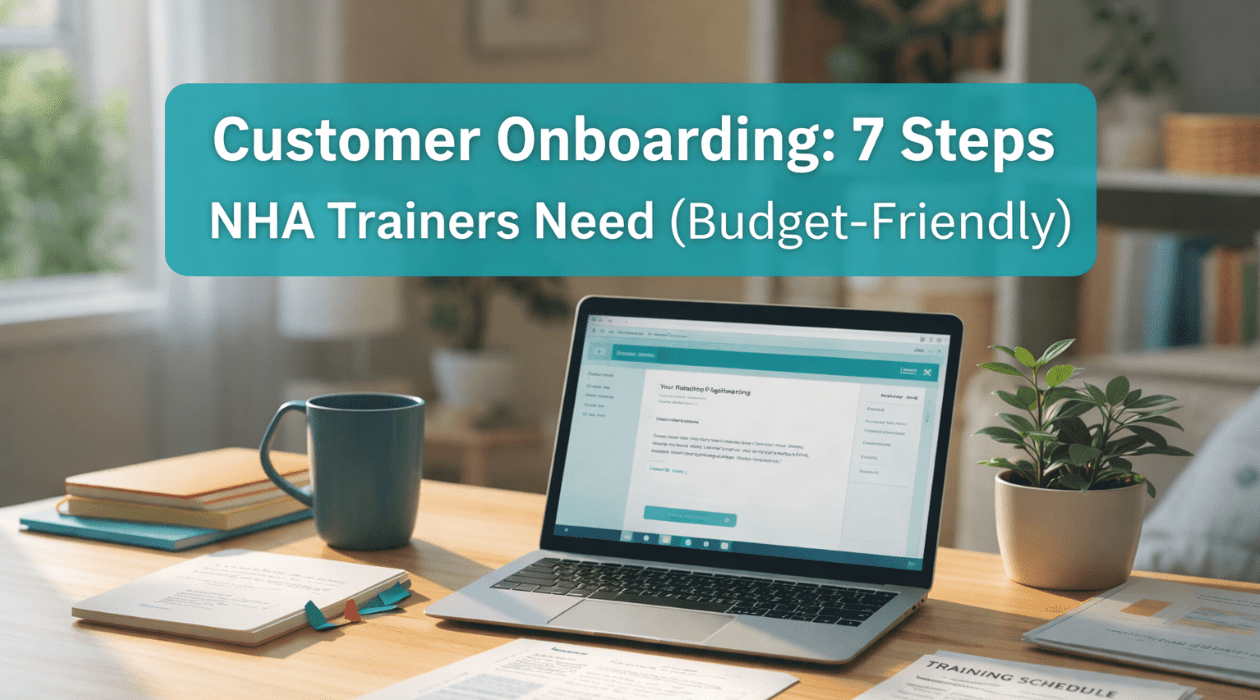
Customer Onboarding: 7 Steps NHA Trainers Need (Budget-Friendly)
You’re passionate about the Nurtured Heart Approach. You’ve completed your Certified Trainer Intensive. You’ve set up your website and maybe even posted a few times on social media. But when someone actually signs up for your training, do you have a system ready?
Implementing effective Customer Onboarding will set the tone for a successful training experience.
If you’re like most NHA trainers just starting out, the answer is probably no. And that’s where onboarding becomes critical.
Effective onboarding doesn’t require expensive software or a full-time assistant. What it does require is intentional planning, simple systems, and a clear understanding of what your participants need to succeed. This guide walks you through building a onboarding flow that works for your NHA training business without breaking your budget.
What Onboarding Actually Means for NHA Trainers
A well-structured onboarding process ensures that participants feel engaged right from the start.
Onboarding is the process of welcoming new participants into your training program and setting them up for success. For NHA trainers, this process starts the moment someone registers for your Video Training Module and continues until they feel confident navigating your training environment.
Effective onboarding doesn’t require expensive software or a full-time assistant. What it does require is intentional planning, simple systems, and a clear understanding of what your participants need to succeed. This guide walks you through building an onboarding flow that works for your NHA training business without breaking your budget.
- Getting participants the right information at the right time, ensuring they know how to access your training materials, setting clear expectations about what happens before, during, and after training, and reducing the anxiety that comes with starting something new.
- When you implement effective onboarding, you reduce no-shows, minimize confused emails the day of training, create space for you to focus on delivery instead of logistics, and build confidence in your professionalism from the start.
- The beauty of onboarding for NHA trainers is that you can build it once and use it repeatedly. Every Certified Trainer Intensive follows a similar pattern. Every Video Training Module has the same access process. Once your onboarding system is in place, it runs automatically while you focus on what you do best: teaching the Nurtured Heart Approach.
Step 1: Map Your Onboarding Journey
Before you build anything, you need to understand what your participants actually experience. Good onboarding starts with mapping the journey from their perspective, not yours.
Start by asking: What does someone need to know immediately after registering? What questions will they have three days before training starts? What do they need access to on training day? What should they receive after completing the training?
For most NHA trainers, the customer onboarding journey includes these key moments: registration confirmation, pre-training preparation, training day logistics, post-training follow-up, and ongoing support access.
Write down every communication you currently send (or should send) to participants. List every document they need. Note every question you repeatedly answer. This becomes your onboarding roadmap.
The goal isn’t to overwhelm participants with information. The goal is to provide the right information at the moment they need it. Effective onboarding feels seamless because participants get exactly what they need without having to ask for it.
Step 2: Create Your Registration Confirmation System
The first touchpoint in your onboarding process happens immediately after someone registers. This confirmation sets the tone for everything that follows.
Your registration confirmation should accomplish three things: confirm the transaction went through, provide immediate next steps, and reduce anxiety about what happens next.
For budget-conscious onboarding, you can use free or low-cost email tools to automate this confirmation. Most payment processors like Stripe or PayPal include basic email functionality. If you’re using a platform like Teachable or Kajabi for your Video Training Modules, they handle registration confirmations automatically.
Your confirmation email should include: what they registered for, when and where it takes place, what they can expect to receive next, how to contact you if they have questions, and a warm welcome that reflects NHA values.
Remember that onboarding starts with emotional connection. Your confirmation isn’t just a receipt. It’s the first step in building a relationship with someone who wants to learn the Nurtured Heart Approach.
Step 3: Build Your Pre-Training Communication Sequence
The gap between registration and training day is where most onboarding falls apart. Participants register enthusiastically, then hear nothing for weeks. When training day arrives, they’ve forgotten details or feel disconnected.
Effective onboarding includes planned touchpoints during this waiting period. You don’t need to email daily, but you should maintain connection.
Budget-friendly tools for this onboarding step include Gmail with scheduled sending (completely free), Mailchimp free tier (up to 500 contacts), or Google Calendar reminders that trigger you to send emails manually.
Step 4: Prepare Your Training Day Onboarding Materials
Training day is where your onboarding shifts from preparation to delivery. Even though you’re focused on teaching content, small touches make participants feel welcomed and supported.
For Zoom-based training, onboarding on training day includes: a welcome slide participants see while waiting for you to start, a brief orientation to Zoom features like raising hands or using chat, clear expectations about breakout rooms if you use them, and a schedule so participants know when breaks happen.
Many NHA trainers struggle with the technical side of onboarding during live virtual training. You’re trying to manage breakout rooms, watch the chat, deliver content, and handle technical issues simultaneously.
This is where fractional support becomes valuable in your onboarding process. A virtual assistant trained in Zoom can handle breakout room assignments, monitor chat for questions, and manage technical troubleshooting while you focus on teaching. This isn’t a luxury cost. At pay-as-you-go rates, having support for a six-hour training session costs less than you’d lose from one distracted, overwhelmed participant who doesn’t complete certification.
Step 5: Design Your Post-Training Follow-Up
Customer onboarding doesn’t end when training ends. What happens in the days and weeks after completion determines whether participants implement what they learned or let it fade.
Your post-training follow-up should include: a thank you email within 24 hours, access to any promised resources or recordings, information about next steps in their NHA journey, and a check-in email two weeks later asking how implementation is going.
Remember, effective Onboarding is crucial for long-term retention and success.
The cost of good post-training onboarding is minimal. You’re sending emails you’ve already written. But the impact on participant satisfaction and word-of-mouth referrals is substantial.
Step 6: Set Up Your Customer Onboarding Technology Stack
You don’t need enterprise software to run effective onboarding. Most NHA trainers can build a complete system using free or low-cost tools.
Here’s a budget-friendly onboarding technology stack: Gmail for email communication (free), Google Calendar for scheduling and reminders (free), Google Drive for storing training materials and templates (free up to 15GB), Zoom for delivering Certified Trainer Intensives (free for sessions under 40 minutes, or paid plan at $14.99/month), and Stripe for payment processing (2.9% plus $0.30 per transaction).
The key to onboarding technology is integration. Your tools should work together smoothly. If you’re manually copying information between systems or forgetting to send emails because there’s no reminder, your onboarding will break down.
Consider investing in a simple project management tool like Trello (free) or Asana (free up to 15 users) to track where each participant is in your onboarding process. Create a board with columns for registered, pre-training communication sent, training completed, and follow-up complete. Move participants through as they progress.
Step 7: Document Your Onboarding Process
The final step in building your customer onboarding system is writing everything down. This seems obvious, but most trainers skip it. They build a system in their heads, then forget steps when they’re busy or stressed.
Create a simple onboarding checklist that covers every step from registration to post-training follow-up. Include details like: what email to send when, what information each email should contain, where to find email templates, how to set up Zoom meetings, when to assign breakout rooms, what resources to share when, and how to track completion.
Store this onboarding documentation somewhere accessible. Google Docs works fine. The important thing is that you can find it quickly and update it as your process evolves.
Documentation also makes it possible to delegate parts of your onboarding process. If you reach a point where you want support with registration confirmations, reminder emails, or Zoom management, you can hand someone your documented process and they can execute it without constant questions.
Common Onboarding Mistakes NHA Trainers Make
Even with good intentions, trainers often make predictable onboarding mistakes that hurt participant experience.
The first mistake is information overload. Some trainers send a massive email after registration with every possible detail about training. Participants feel overwhelmed and don’t read it. Good onboarding spaces information out over time.
The second mistake is assuming participants remember details. You sent the Zoom link two weeks ago. Of course they saved it, right? Wrong. Effective customer onboarding repeats critical information at relevant moments.
The third mistake is neglecting the emotional side of onboarding. Participants aren’t just enrolling in training. They’re investing in becoming better at something they care about. Your onboarding should acknowledge that emotional investment with warmth and encouragement.
The fourth mistake is treating onboarding as purely transactional. Yes, someone paid for training. But onboarding is relationship-building. The way you welcome and support participants affects whether they recommend you to others, return for advanced training, or stay connected to the NHA community you’re building.
When to Get Help With Onboarding
Most NHA trainers can handle onboarding themselves when they’re running occasional trainings. But as you grow, certain customer onboarding tasks become bottlenecks.
Consider delegating onboarding tasks when: you’re running multiple Certified Trainer Intensives per month, you’re missing registration confirmations or reminder emails because you’re too busy, you’re stressed about Zoom logistics during training, or you’re spending more time on administrative tasks than on developing your training content.
Virtual assistants who understand NHA methodology can handle most onboarding tasks. They can send registration confirmations, schedule reminder emails, manage Zoom breakout rooms during training, organize training materials, and follow up with participants after training completes.
The beauty of fractional support for onboarding is flexibility. You don’t need full-time help. You need someone for a few hours around each training. Pay-as-you-go rates make this affordable even when you’re just starting to scale.
Measuring Customer Onboarding Success
How do you know if your customer onboarding is working? Track simple metrics.
For onboarding effectiveness, monitor: no-show rates for scheduled trainings, number of confused emails you receive before training day, technical issues during training that could have been prevented with better preparation, participant satisfaction ratings after training, and completion rates for Video Training Modules.
Good onboarding should reduce problems, not create them. If your no-show rate drops from 15% to 5% after implementing a reminder sequence, your system is working. If participants tell you they felt well-prepared and supported, your onboarding is working.
Don’t over-complicate onboarding measurement. The goal isn’t perfect data. The goal is directional improvement. Are things getting better or worse? That tells you whether your onboarding changes are working.
Scaling Your Customer Onboarding as You Grow
The onboarding system you build today should grow with you. Start simple, then add sophistication as your training business expands.
By focusing on Customer Onboarding, you can enhance participant satisfaction and value.
In your first year, your onboarding might be mostly manual. You send emails yourself. You handle Zoom logistics yourself. You follow up personally. That’s fine when you’re running one or two trainings per month.
As you scale to multiple trainings monthly, start automating onboarding tasks. Use email scheduling. Create templates. Set up automated payment confirmations. Build systems that run without your constant attention.
When you reach consistent monthly revenue, consider dedicated onboarding support. Someone who handles registrations, sends communications, manages Zoom logistics, and follows up with participants. This frees you to focus on training delivery and business development.
The key to scaling onboarding is documentation. Every time you refine a process, update your documentation. Every time you create a new email template, save it. Every time you solve a onboarding problem, record the solution. This creates a knowledge base that makes delegation possible.
Frequently Asked Questions About Customer Onboarding for NHA Trainers
How much time does onboarding take?
Building your initial onboarding system takes 4-6 hours. This includes mapping your journey, creating email templates, and setting up your technology. Once built, onboarding maintenance takes 15-30 minutes per participant for manual tasks, or as little as 5 minutes per participant with automation.
Do I need expensive software for onboarding?
No. Effective onboarding for NHA trainers can run on free tools like Gmail, Google Calendar, and Google Drive. Paid tools like Zoom ($14.99/month) and Teachable (starting at $39/month) add functionality but aren’t required when you’re starting out.
No. Effective onboarding for NHA trainers can run on free tools like Gmail, Google Calendar, and Google Drive. Paid tools like Zoom ($14.99/month) and Teachable (starting at $39/month) add functionality but aren’t required when you’re starting out.
Customer onboarding matters even for occasional trainers. In fact, it matters more because you’re more likely to forget steps between trainings. A documented onboarding process ensures consistency whether you’re running training monthly or quarterly.
Use templates for efficiency, but personalize key elements. Include the participant’s name. Reference the specific training they registered for. Add a personal sentence when appropriate. The goal is warm efficiency, not cold automation.
Create separate flows for Certified Trainer Intensives versus Video Training Modules. They have different participant needs. CTI onboarding focuses on live training preparation. VTM onboarding focuses on platform access and self-paced learning support.
How do I handle onboarding for different training formats?
Create separate onboarding flows for Certified Trainer Intensives versus Video Training Modules. They have different participant needs. CTI onboarding focuses on live training preparation. VTM onboarding focuses on platform access and self-paced learning support.
When should I delegate customer onboarding tasks?
Delegate onboarding when administrative tasks prevent you from developing content or delivering training. Start with technical tasks like Zoom management during live training, then expand to communication tasks like sending reminders and follow-ups as you grow.
Building Onboarding That Works
Effective customer onboarding for NHA trainers isn’t about complexity. It’s about consistency and care.
You don’t need enterprise software. You don’t need a full-time team. You need clear processes, simple tools, and the discipline to follow through on what you’ve built.
Start with the seven steps outlined in this guide. Map your onboarding journey. Create your confirmation system. Build your communication sequence. Prepare training day materials. Design post-training follow-up. Set up your technology. Document everything.
Start with the seven steps outlined in this guide. Map your onboarding journey. Create your confirmation system. Build your communication sequence. Prepare training day materials. Design post-training follow-up. Set up your technology. Document everything.
Remember that onboarding serves both you and your participants. It reduces your stress by automating repetitive tasks. It improves participant experience by providing clear guidance and support. When done well, onboarding becomes invisible because everything just works.
If you’re feeling overwhelmed by the technical side of onboarding, particularly Zoom management during Certified Trainer Intensives, consider fractional support. Virtual assistants trained in NHA methodology can handle breakout rooms, monitor chat, manage technical issues, and ensure your onboarding runs smoothly while you focus on teaching.
The Nurtured Heart Approach transforms how people interact with children. Your onboarding should transform how people experience your training. Build systems that honor both your expertise and your participants’ investment in learning from you.
Ready to Build Your Onboarding System?
Your Remote Office Space (YROS) specializes in supporting NHA trainers with onboarding, Zoom management, and administrative systems. Our team includes Certified Trainers who understand VTM logistics, breakout room management, and the specific needs of Nurtured Heart Approach training delivery.
We offer fractional support starting at $35/hour with no monthly minimums. Get help with onboarding setup, training day Zoom management, participant communication, or complete administrative support for your growing NHA training business.
Based in Alton, Illinois and serving NHA trainers nationwide, we understand both the methodology and the operational challenges you face. Let us handle your onboarding while you focus on transforming lives through the Nurtured Heart Approach.
Contact YROS today to discuss your onboarding needs.
Remember that onboarding serves both you and your participants. It reduces your stress by automating repetitive tasks. It improves participant experience by providing clear guidance and support. When done well, onboarding becomes invisible because everything just works.
Related Blog Posts
- Onboarding New Clients: Creating Repeatable Systems
- Building Your First Customer Onboarding Flow on a Budget
- Client Intake Forms: What Information You Actually Need
- Standard Response Templates for Common Questions
- Client Portal Setup and Management Best Practices
- Warranty Update Templates: 7 Proven Ways to Stop Losing Money
- Webinar Planning: 3 Essential Proven Success Hacks
- Meeting Preparation: What Your VA Can Do Before You Join
- Project Handoff Documentation Between Team Members
- Status Update Systems That Don’t Require Constant Meetings
- Time Blocking for Creative vs Administrative Work
- Scaling systems: 6 proven powerful wins for massive growth
- SOP Development for Small Teams: 7 Proven Success Secrets
- How to Document Your Business Processes When They’re All in Your Head
- Company Wiki: 5 Essential Rules for Winning Massive Updates
- Creating Task Handoff Systems That Actually Work
- Documentation for Teams: 4 Vital Docs to Save Success
- Process improvements: 5 Proven Massive Easy Wins
- The First 5 Things to Delegate When You Hire Your First VA
- Managed Office Help: 5 Powerful, Proven, Bad Mistakes to Avoid
- Onboarding Your First Virtual Assistant: Week-by-Week Guide
- When to Hire a Bookkeeper vs a Virtual Assistant for Your Books
- Cheap VA Trained Trade Support: 5 Painful Brutal Truths
- Calculating ROI on Your Virtual Assistant Investment
- Time Tracking for Virtual Assistants: Transparency and Trust
- Red Flags to Watch for When Hiring Virtual Assistants
- Breakout Rooms: 7 Powerful Systems for Massive Group Success
- How to Reduce No-Shows for Your NHA Training
- Scaling From 1 Training Per Month to 4 Without Burning Out
- Automating VTM Access Without Confusing Participants
- Pre-Training Email Sequences That Keep Participants Engaged
- Effective Delegation for Trade Owners: 5 Proven Secrets