Minimalist Business Tools: 10 Incredible Ways to Build Your Brave Stop Doing List
Your business is slowly suffocating you and you are the one holding the pillow over its face. You think you are being a hero by answering the phone while balancing on a ladder in a damp basement. You believe that staying up until 2:00 AM to finish those invoices makes you a dedicated entrepreneur.
The reality is much darker than that. You are not being a hero. You are being a bottleneck. Every time you stop a billable job to handle a scheduling conflict, you lose money. Every hour you spend wrestling with a spreadsheet is an hour you are not growing your company.
There is a better way to operate. It does not involve working more hours or buying more complicated software. It involves subtraction. It involves looking at your daily routine and deciding what needs to die so your business can live.
You need to stop doing the things that do not move the needle. You need a list of tasks to abandon immediately. This is not a suggestion. It is a survival strategy for any trade business owner who wants to see their kids before they go to bed.
The Dangerous Seduction of the To-Do List
Most business owners are obsessed with adding things. We add more services, more tools, more employees, and more items to our morning checklists. We think that a longer to-do list is a sign of success.
In reality, a long to-do list is often just a symptom of a lack of focus. You are filling your time with low-value activities because they feel like work. Checking email feels like work. Filing receipts feels like work. But these things do not build an empire.
When you focus only on what to do, you ignore the cost of those actions. Every minute you spend on a “to-do” is a minute you cannot spend on high-level strategy or sales. This is why you need to shift your mindset toward what you should stop doing.
If you are a plumber, an electrician, or an HVAC technician, your time is worth hundreds of dollars an hour. Why are you spending it doing tasks that a professional remote office could handle for a fraction of that cost? You are essentially paying yourself $200 an hour to do $25 an hour work.

Why Minimalist Business Tools Are Your Secret Weapon
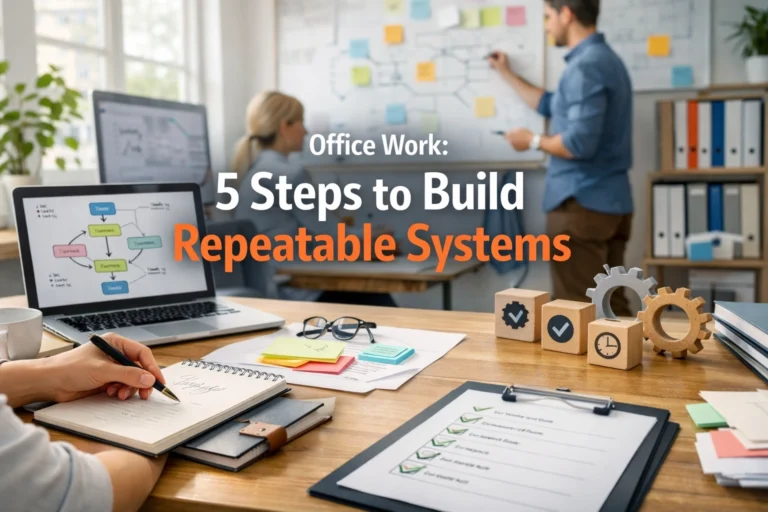
You do not need a complex suite of twenty different applications to run your office. In fact, the more tools you have, the more time you spend managing the tools instead of your business. The most successful contractors use Minimalist Business Tools to keep their operations lean and practical.
A minimalist approach means choosing only the essential platforms that actually solve problems. You need a way to schedule, a way to bill, and a way to communicate. Anything beyond that is likely just noise that creates more work for you.
When you adopt Minimalist Business Tools, you reduce the cognitive load on your brain. You stop wondering which app holds the customer information or where that specific invoice went. You create a streamlined path for data to flow from the initial call to the final payment.
YORS specializes in helping business owners identify these tools. We see people drowning in “automation” that they do not understand and cannot maintain. True efficiency comes from simplicity and having the right people manage that simplicity for you.
Using Minimalist Business Tools is not about being cheap. It is about being effective. It is about realizing that your time is your most precious resource and guarding it with your life. If a tool does not save you at least five hours a week, it might not be worth the setup time.
That is why Minimalist Business Tools fit the “Stop Doing List” theme so well. You are not trying to build a flashy office. You are trying to build an office that stops wasting your time. Minimalist Business Tools help you strip your business back to what actually supports scheduling, customer communication, billing, and follow-through.
For a plumbing company, Minimalist Business Tools might mean using one shared inbox, one scheduling platform, and one bookkeeping workflow instead of bouncing between texts, sticky notes, and half-finished QuickBooks entries. For an HVAC shop, Minimalist Business Tools might mean one clean system for incoming calls, estimates, and appointment updates so your technicians are not constantly calling you from the road for basic information.
For a pest control owner, Minimalist Business Tools can stop the daily scramble of digging through messages to find gate codes, reschedule service, or confirm recurring visits. For a commercial cleaning company, Minimalist Business Tools can make sure job notes, team updates, and client requests are all handled in one clear process instead of living in your head.
This is the part many owners miss. Minimalist Business Tools are not only software choices. They are management choices. They force you to decide what deserves your attention and what needs to come off your plate. That is the whole point of a stop doing list.
If your current system requires you to answer every question, review every invoice, chase every callback, and personally remember every detail, your tools are not helping you. They are trapping you. Minimalist Business Tools give your support team a clean structure to follow so work gets done without dragging you into every tiny decision.
You do not need more options. You need fewer moving parts and better follow-through. You do not need a bigger dashboard, you need Minimalist Business Tools that keep your business organized enough for someone else to help you carry the load.
That is where YORS becomes useful. We work inside the tools you already use or help you tighten up the basic setup so your office runs with less confusion. The goal is not to impress people with a complicated back office. The goal is to help you stop doing the repetitive office work that is burning you out.
When you build your stop doing list around Minimalist Business Tools, you make delegation easier because the handoff is cleaner. There are fewer places for information to hide. There are fewer weird personal workarounds. There are fewer moments where your team has to stop and ask what you meant.
That simplicity matters more than most owners realize. Minimalist Business Tools make training easier. Minimalist Business Tools reduce missed details. Minimalist Business Tools make it easier for a US-based remote office team to answer your phones, handle your emails, update your schedule, and keep your customers from slipping through the cracks.
You say you want less chaos. Good. Then stop building chaos into the way your office runs. Start with Minimalist Business Tools and build a stop doing list that protects your time instead of draining it.
The Workflow Efficiency Hacks You Actually Need
Efficiency is not about moving faster. It is about removing the obstacles that slow you down. For a field service business, those obstacles are usually administrative.
One of the best workflow efficiency hacks is the radical delegation of your phone lines. If you are still answering your own phone, you are losing jobs. Customers do not want to hear a heavy-breathing technician who is clearly in the middle of a repair. They want a professional voice who can book them immediately.
Another major hack is the “One-Touch Rule” for paperwork. If a technician finishes a job, the invoice should be generated and sent immediately by a remote support team. There is no reason for those papers to sit on a dashboard for three days.
We often talk to business owners who think they have a “process” but really they have a series of bad habits. They wait until Friday to do all the billing. They wait until the end of the month to reconcile the books. These are not processes. They are disasters waiting to happen.
By implementing workflow efficiency hacks, you reclaim hours of your day. Imagine finishing your last job at 4:00 PM and actually being done for the day. No paperwork. No missed calls to return. That is the power of a “Stop Doing” list in action.
Virtual Assistant vs Employee: The Great Debate
When you realize you need help, the first instinct is often to hire a local secretary. You think you need someone sitting in a chair in your office. But have you looked at the math of a virtual assistant vs employee lately?
A local employee comes with a massive amount of baggage. You have to deal with payroll taxes, worker’s compensation, office space, and equipment. You also have to worry about what they are doing when the phones are quiet. You are paying for their downtime just as much as their uptime.
When comparing a virtual assistant vs employee, the flexibility of a remote team wins every time. With YROS, you get a professional who is already trained in your industry. You do not have to spend three weeks teaching them what a “capacitor” or a “flashing” is.
The virtual assistant vs employee debate is really about scalability. If your business has a slow month, an employee is a fixed cost that can sink you. A remote service can often scale with your needs. You get the high-level support without the high-level overhead.
Furthermore, a remote office like YROS does not get sick or go on vacation without a backup. If your local secretary quits, your office stops. If you use a remote team, the systems stay in place regardless of who is sitting in the seat. That is true business continuity.

In the Wild: The Plumber Who Tried to Do Everything
Let us look at a real scenario. We will call him Mike. Mike ran a successful plumbing business in a mid-sized city. He had three trucks on the road and a reputation for doing great work. But Mike was miserable.
Mike insisted on doing all the dispatching himself. He used Minimalist Business Tools like a basic calendar and QuickBooks, but he was the only one with the password. He thought this gave him control. In reality, it gave him a prison sentence.
One Tuesday, Mike was in a crawlspace fixing a burst pipe. His phone rang six times in twenty minutes. Because he could not answer, three of those potential customers called his competitor. One of those missed calls was for a $15,000 commercial repiping job.
By the time Mike got out of the crawlspace, he was exhausted. He had to drive to the next job, but he spent forty minutes in his truck returning calls. He was late for the next customer, who was already annoyed. This pattern repeated every single day.
The failure moment came when Mike missed his daughter’s graduation because he was stuck in his home office trying to catch up on three weeks of invoicing. He had the money, but he had no life. He realized that “doing it all” was actually “losing it all.”
The Fix: Mike did not need more hours in the day. He needed a “Stop Doing” list. He needed to stop answering the phone. He needed to stop doing the invoicing. He needed to stop being the only person who knew the schedule.
Mike reached out to YORS. We took over his phones, his scheduling, and his billing. He stayed with his Minimalist Business Tools because they worked, but he handed the keys to professionals. Today, Mike has five trucks, and he actually goes home at 5:00 PM.
What changed was not magic. It was structure. Mike finally used Minimalist Business Tools the way they were supposed to be used. Not as a private control system locked inside his head, but as a shared operating system his support team could manage with him.
Before that shift, Mike treated every task like proof that he cared more than anyone else. He answered every ring. He double-checked every invoice. He reviewed every calendar move. That sounds responsible until you see the cost. His jobs slowed down. His callbacks piled up. His home life took the hit.
After the handoff, Minimalist Business Tools made the office visible. His call notes were centralized. His appointment changes were tracked in one place. His billing status was no longer hidden in random papers and memory. That meant he could stay in the field without dragging the whole business down with him.
This is why the stop doing list matters. It is not just a cute exercise. It is how you stop acting like the only adult in the room. Minimalist Business Tools gave Mike a way to trust the process because the process was finally clear enough for other people to run.
You may not be a plumber with three trucks, but the pattern is probably uncomfortably familiar. Maybe you run electrical service calls, garage door repair, fire and security system installs, or roofing maintenance. Different trade, same trap. If you are still doing office work from the driver’s seat, Minimalist Business Tools can become the backbone of the stop doing list you should have made a year ago.
Mike did not need more motivation. You probably do not either. He needed cleaner systems, better boundaries, and support that could work inside Minimalist Business Tools without making him train somebody from scratch. That is what gave him his evenings back.
Your Three-Step Stop Doing List Protocol
Creating this list is not a one-time event. It is a habit you must cultivate. You need to look at your business with a cold, analytical eye. If a task does not require your specific license or your specific physical presence, you should probably stop doing it.
Step one is the Time Audit. For one week, write down every single thing you do. Every phone call, every trip to the supply house, every email. Be honest. If you spent twenty minutes looking for a lost receipt, write it down.
Step two is the Categorization. Look at your list and mark everything that is not a “Primary Revenue Driver.” If it does not directly lead to a completed job or a new sale, it is a candidate for the “Stop Doing” list.
Step three is the Transition. This is where you decide between a virtual assistant vs employee. You find a partner like YROS who can take these tasks off your plate immediately. You do not just stop doing them and let them fail; you stop doing them by giving them to someone better equipped to handle them.
You will feel a strange sense of guilt when you first do this. You have been conditioned to believe that “hard work” equals “busy work.” You must fight that feeling. Your job as the CEO is to steer the ship, not to be the one scrubbing the decks while the ship hits an iceberg.

The Psychological Barrier to Subtraction
Why is it so hard for trade business owners to let go? It usually comes down to trust and ego. You think no one can talk to your customers like you can. You think no one will be as careful with the billing as you are.
This ego is the ceiling on your growth. If you are the only one who can do the tasks, your business can never be larger than what you can physically handle. You have created a job for yourself, not a company.
When you look at workflow efficiency hacks, the most powerful one is trust. Trusting a professional service to represent your brand is the first step toward freedom. You have to accept that they might do things differently than you, and that is okay. Often, they will do them better.
Minimalist Business Tools help with this transition because they provide transparency. You can log in and see exactly what your remote team is doing. You are not giving up control; you are gaining oversight. You move from being the worker to being the manager.
Stop telling yourself that you will delegate “once things slow down.” Things will never slow down as long as you are the one doing everything. The chaos is a direct result of your refusal to let go. You have to break the cycle now.
A stop doing list sounds simple, but it pokes at your identity. You have spent years being the fixer, the closer, the one who jumps in and saves the day. So when somebody tells you to stop touching inboxes, stop chasing late payers, or stop reworking the schedule every ten minutes, it feels like losing control.
It is not losing control. It is finally building some.
That is why Minimalist Business Tools matter psychologically, not just operationally. They reduce the fear that something is getting lost. You can see the calendar. You can review the notes. You can check the status of open items. Minimalist Business Tools create enough visibility for you to loosen your grip without feeling blind.
This is especially important if you have been burned before. Maybe you hired someone local who needed constant babysitting. Maybe your cousin helped for two weeks and then vanished. Maybe a past office person created such a mess that you now believe nobody can be trusted. Fine. That experience was real. But using one bad experience as an excuse to keep doing everything yourself is still self-sabotage.
You do not need blind faith. You need clean processes, a clear handoff, and Minimalist Business Tools that show you what is happening without forcing you to do the work yourself.
The stop doing list only works when you stop pretending your involvement improves every task. Sometimes your involvement slows the task down. Sometimes your involvement creates the bottleneck. Sometimes your involvement is exactly why your office still feels like a daily fire.
That stings because it is true.
If you are serious about building a business that can grow, then Minimalist Business Tools have to support a different role for you. You stop being the person who handles every message and starts every process. You become the person who reviews outcomes, protects standards, and makes decisions only where your judgment is actually required.
That shift is uncomfortable. Good. Growth usually is. But Minimalist Business Tools make that discomfort survivable because they give you a practical bridge between total control and total chaos. You do not need either extreme. You need a cleaner middle ground where your support team can do their job and you can stop doing theirs.
Mastering Minimalist Business Tools for Growth
Once you have your “Stop Doing” list, you need the right infrastructure to support your new freedom. This is where Minimalist Business Tools shine. You want a tech stack that is so simple a child could understand it, because your brain is already full of plumbing codes and wiring diagrams.
Avoid the temptation to buy the most expensive enterprise software on the market. Most of those tools are built for companies with hundreds of employees and dedicated IT departments. For a small trade business, they are just a distraction.
Focus on tools that allow for easy collaboration between you and your remote team. Cloud-based scheduling and estimating are non-negotiable. You need to be able to see your schedule on your phone while your remote office updates it in real-time.
When comparing a virtual assistant vs employee, remember that a remote professional already knows how to use these Minimalist Business Tools. You are not paying for their learning curve. You are paying for their expertise.
YORS can help you audit your current tools. We often find that business owners are paying for three different services that all do the same thing. By consolidating into Minimalist Business Tools, you save money and reduce errors. It is a win-win for everyone involved.
Let us make this practical. If your office uses ServiceTitan, Housecall Pro, Jobber, QuickBooks, Gmail, and a shared phone system, you do not need five more layers stacked on top. You need Minimalist Business Tools arranged in a way that makes handoff obvious. Calls come in, appointments get booked, notes get captured, invoices move out, and follow-up happens without you acting as the bridge between every step.
That is what business owners miss when they chase “better systems.” Better does not always mean more. Better often means fewer. Minimalist Business Tools work because they remove the dead weight that keeps slowing your team down.
If you run a small SaaS company, Minimalist Business Tools may look like a shared inbox, a support queue, a billing dashboard, and one calendar your team actually uses. If you run a water damage restoration company, Minimalist Business Tools might mean one intake workflow, one dispatch handoff, one job-status process, and one place for customer updates. Different industries, same principle.
The stop doing list gets easier to maintain when Minimalist Business Tools are clear. You stop drifting back into old habits because there is no reason to. The team knows where things live. You know where to check. Customers get faster responses because your office is not built around your memory.
There is also a training advantage here. Minimalist Business Tools reduce the amount of explanation required when support shifts or business grows. Instead of teaching somebody your personal maze of texts, notebooks, and side conversations, you are teaching them one clean process. That matters when your business is busy and patience is already in short supply.
Another benefit is accuracy. When you rely on memory, verbal relays, or random scraps of paper, mistakes multiply. Wrong addresses. Missed follow-ups. Open estimates that nobody calls back. Minimalist Business Tools lower those mistakes because they create a standard place for the work to happen.
You do not need a glamorous office. You need one that does not fall apart the minute your phone battery dies. Minimalist Business Tools help you build that kind of business. They support the stop doing list by making sure what you hand off stays handed off.
And yes, you still need people. Tools alone do not answer the phone with patience, calm down frustrated customers, clean up scheduling issues, or keep your calendar from unraveling on a Thursday afternoon. But Minimalist Business Tools give those people the structure to do the job well.
That is the real growth play. Not bigger software. Not more chaos disguised as innovation. Just Minimalist Business Tools, a support team that can run them properly, and a stop doing list you actually commit to.
Radical Workflow Efficiency Hacks for the Field
If you are in the field, your biggest enemy is the “lost” hour. This is the hour spent driving back to the office to get a paper file. It is the hour spent trying to figure out if a customer paid their deposit.
One of the best workflow efficiency hacks is to move all customer communication to a centralized hub. Your remote team should handle the “Where are you?” calls and the “How much will it cost?” inquiries. Your only communication should be with your team.
Think of your business as a high-performance engine. You are the spark plug. YORS is the oil that keeps everything moving smoothly. Without the oil, the engine seizes up. Without the spark, nothing happens. Both are necessary, but they have very different jobs.
Implementing workflow efficiency hacks also means standardizing your responses. Your remote team should have a script for common questions. They should know your pricing structure inside and out. This ensures that every customer gets the same high-quality experience, regardless of who answers the phone.
This consistency is what builds a brand. When people know that your office is responsive and professional, they stop shopping on price. They start paying for the reliability. That is how you increase your margins without working a single extra hour.
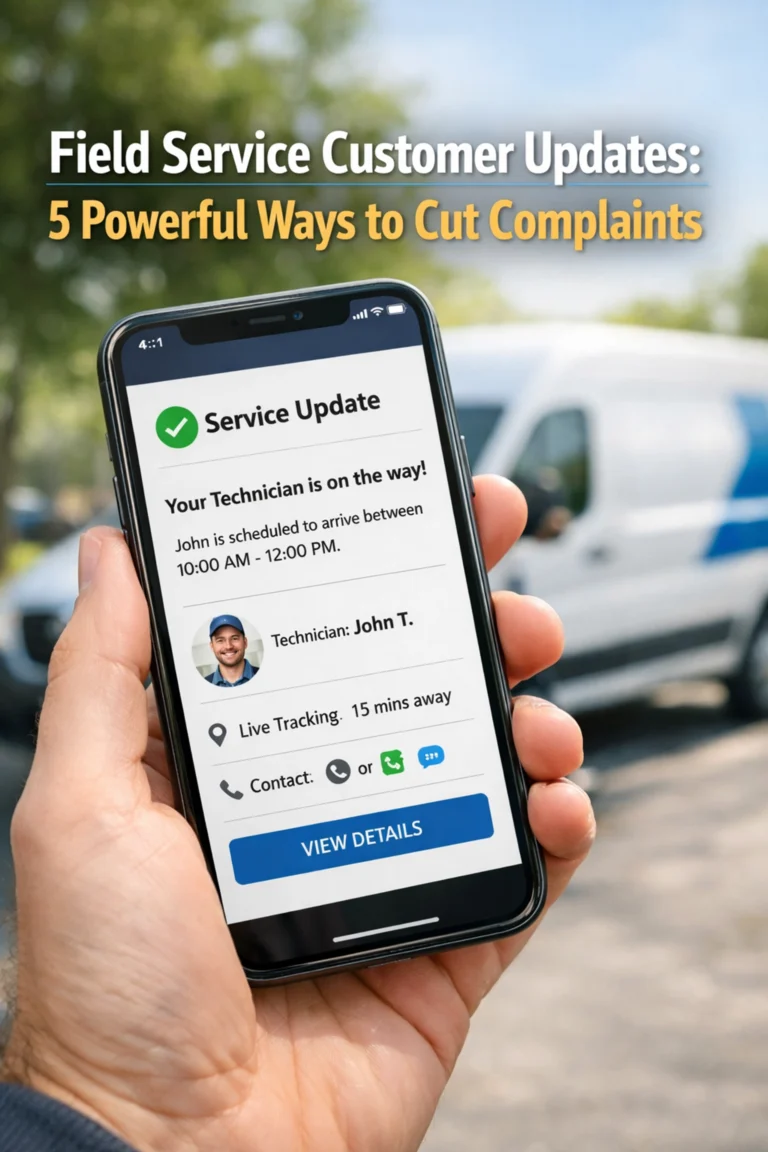
And this is exactly where Minimalist Business Tools prove their value in the real world. When a customer calls asking whether the technician is on the way, your office team should not need to text three people and wait. Minimalist Business Tools should show the appointment status, customer notes, and next action immediately.
If you run garage door repair, fire and security service, appliance repair, roofing maintenance, or electrical work, the field is chaos by default. Jobs run long. Crews get delayed. Weather shifts. Parts go missing. Minimalist Business Tools do not eliminate that chaos, but they stop it from spreading into your office and wrecking the rest of the day.
The stop doing list matters most when the day goes sideways. Anybody can feel organized on a quiet Tuesday. The test comes when two technicians call out, one customer is angry, another wants to reschedule, and a fresh lead comes in while you are still on a ladder. In that moment, Minimalist Business Tools give your support team a way to respond without dragging you into every tiny update.
That means fewer interruptions. Fewer repeat questions. Fewer moments where you stop mid-job to play dispatcher, receptionist, and bookkeeper from your truck.
This is not about making your business feel robotic. It is about making your office calm enough to handle normal business pressure like adults. Minimalist Business Tools help your support team communicate clearly, document changes, and close loops before loose ends turn into expensive problems.
If your current field workflow depends on your memory, your availability, and your patience level, then your workflow is fragile. Minimalist Business Tools make it sturdier. They help your stop doing list survive the messy days, not just the easy ones.
That is what real efficiency looks like. Not more hustle. Not more tabs open. Not you getting interrupted forty times before lunch. Just Minimalist Business Tools, good office support, and a field schedule that does not collapse every time something unexpected happens.

Virtual Assistant vs Employee: The Cost of Complexity
Let us talk about the hidden costs of a local employee. Beyond the salary, you have the “management tax.” You have to spend your time making sure they are working. You have to deal with their personal drama. You have to buy them a desk and a computer.
In the virtual assistant vs employee comparison, the “management tax” is much lower with a professional service. At YORS, we manage our own people. You do not have to worry about whether your assistant is scrolling through social media. You only worry about the results.
Furthermore, a local employee often becomes a “jack of all trades, master of none.” They try to do the marketing, the phones, and the cleaning. This lack of specialization leads to mistakes. A remote team is specialized in administrative excellence.
Using Minimalist Business Tools allows your remote team to work with surgical precision. They are not distracted by the physical chaos of your office. They are focused on the tasks on your “Stop Doing” list, ensuring they are completed perfectly and on time.
The choice between a virtual assistant vs employee is ultimately a choice between complexity and simplicity. If you want a simple, scalable business, you go remote. If you want to manage people and office space, you stay local. Most trade owners we know prefer the simplicity.
There is also a hidden emotional cost you need to be honest about. A local employee often feels like another person you have to carry. You become the trainer, the manager, the quality checker, and the problem solver for their work on top of your own. If your office is already shaky, adding another person into the mess does not always fix it. Sometimes it just gives the mess a witness.
That is why Minimalist Business Tools matter here too. They keep the support structure clean enough that outside help can step in quickly and do useful work. Without Minimalist Business Tools, you end up paying people to translate your chaos.
You do not need more chaos.
You need a tighter office, a smaller pile of responsibilities on your shoulders, and a stop doing list that actually removes things from your day. Minimalist Business Tools support that by making your business easier to understand, easier to support, and easier to scale without adding unnecessary office overhead.
A lot of owners delay this decision because they think asking for help means they failed at being scrappy. That is nonsense. If anything, clinging to office work you should have handed off months ago is what keeps your business small. Minimalist Business Tools make it easier to accept help because they give that help a clean lane to run in.
So yes, compare the dollars. But also compare the friction. Compare the interruptions. Compare the management load. Compare what your evenings feel like when you are still buried in office work after the field day is done.
If you are serious about protecting your time, then Minimalist Business Tools should not be treated like a side topic. They are one of the main reasons a stop doing list can stick instead of turning into another promise you make to yourself and break by Thursday.
How to Start Your Stop Doing List Today
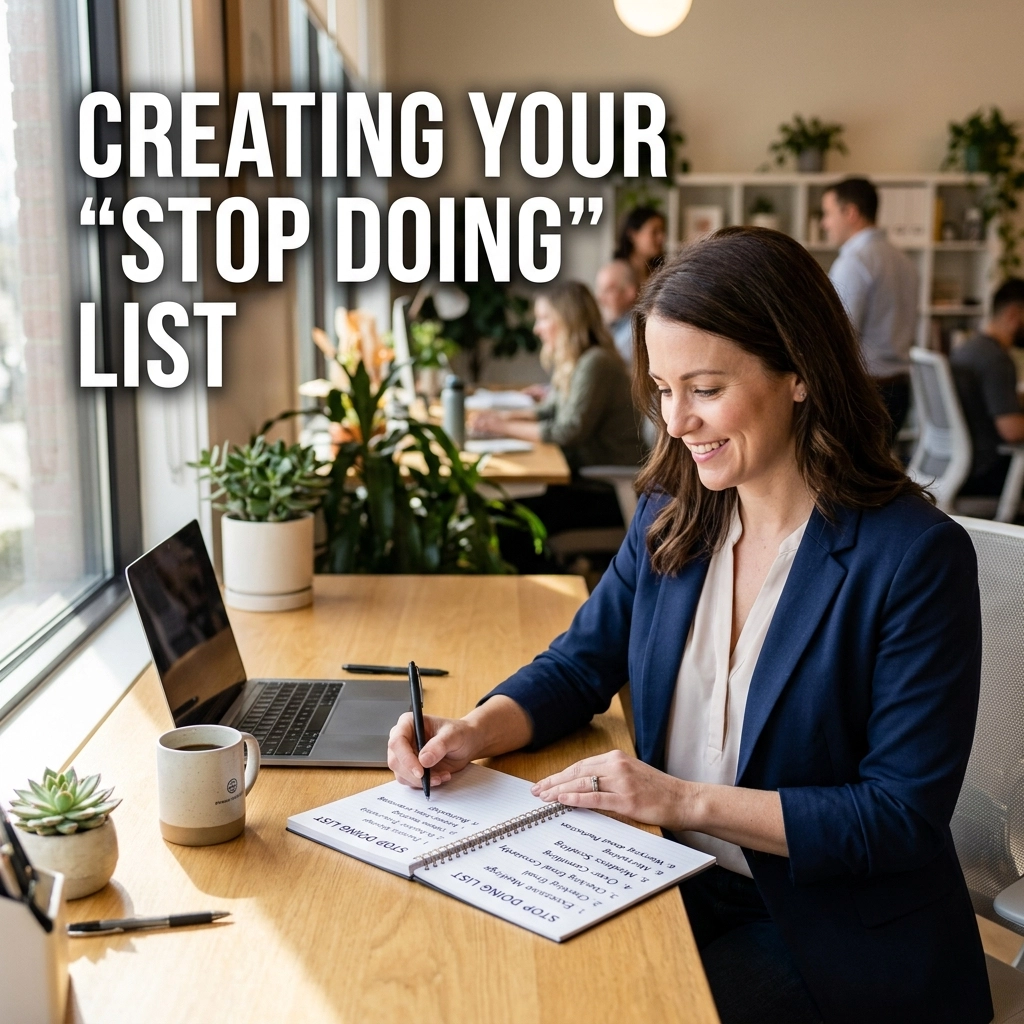
Do not wait until Monday. Do not wait until the next “slow” season. Start your list right now. Take a piece of paper and draw a line down the middle. On the left, write what you love doing. On the right, write what makes you want to scream.
The stuff on the right is your “Stop Doing” list. It is your roadmap to freedom. It likely includes things like following up on unpaid invoices, rescheduling missed appointments, and answering basic price questions.
Once you have that list, look into Minimalist Business Tools that can help facilitate the handoff. You do not need to have it all figured out. That is what YORS is for. We help you bridge the gap between where you are and where you want to be.
Remember that every item you move to the “Stop Doing” list is a gift to your future self. It is a commitment to your family and your health. It is an admission that you are a human being, not a machine.
You have spent years building your skills in your trade. Do not let those skills go to waste because you are too busy being a mediocre secretary. It is time to step back into your role as the expert and let us handle the rest.
If you want a simple way to begin, start with ten categories. That keeps your stop doing list focused and usable.
- Stop answering routine calls while you are on a job.
- Stop chasing basic schedule changes by text.
- Stop replying to every customer email yourself.
- Stop handling every invoice after hours.
- Stop keeping appointment details in your head.
- Stop being the only person who knows the daily plan.
- Stop checking multiple places for the same customer information.
- Stop letting open estimates sit untouched.
- Stop using your evenings to catch up on office work.
- Stop pretending this workload is sustainable.
Now pair each item with Minimalist Business Tools. If you want to stop answering routine calls, your tools should route those calls to a real support team. If you want to stop chasing schedule changes, your calendar and notes need to live in one place. If you want to stop rebuilding invoices at night, your office process has to move faster during the day.
This is why Minimalist Business Tools work so well with a stop doing list. They make each handoff concrete. They take vague goals like “I need more help” and turn them into visible changes in how work moves through your business.
For example, a commercial cleaning owner might stop confirming every site update personally once Minimalist Business Tools centralize client requests and crew notes. A roofing contractor might stop fielding every weather-related reschedule once Minimalist Business Tools give the office team the schedule visibility to handle it. A trainer or consultant might stop spending nights buried in inboxes once Minimalist Business Tools organize messages, calendar changes, and follow-up in one clean process.
Do not overthink this. Your first stop doing list does not need to be perfect. It needs to be honest. Then your Minimalist Business Tools need to support the first few handoffs so you can feel the relief quickly.
That relief matters. It proves you do not have to keep living like this.
When you feel that first little drop in chaos, you start trusting the process. Then Minimalist Business Tools stop feeling like a buzzword and start feeling like what they really are: a practical way to make your business easier to run without making you carry every office task alone.

The ROI of Doing Less
When you stop doing low-value tasks, your revenue actually goes up. This sounds counterintuitive, but it is a proven fact. When you are focused on high-value work, you perform better. You close more deals. You spot more opportunities.
The return on investment for using Minimalist Business Tools and a remote team is often ten to one. For every dollar you spend on support, you make ten dollars in recovered billable time or new sales. It is the most profitable decision you will ever make.
Think about the “Opportunity Cost” of your current lifestyle. What are you giving up by doing your own admin? You are giving up the chance to add another truck. You are giving up the chance to expand into a new territory. You are giving up your peace of mind.
Workflow efficiency hacks are not just about saving time; they are about creating wealth. Wealth is not just money in the bank. Wealth is the ability to choose how you spend your day. If you are stuck behind a computer screen doing data entry, you are not wealthy, no matter how much you earn.
Your “Stop Doing” list is the key to that wealth. It is the permit you need to build the life you actually wanted when you started this business. Take the permit. Start the build.
And let us be honest about what “return” really means. Yes, it can mean more booked work, faster estimates, fewer missed calls, and cleaner billing. But it also means fewer late-night office sessions, fewer apologies to your family, and fewer mornings starting the day already behind.
That is why Minimalist Business Tools matter beyond simple efficiency. They create room. Room to think. Room to lead. Room to stop reacting to every little issue as if the business will fall apart without your fingerprints on it.
If you run a field service business, one missed call can become a lost job. One delayed invoice can become a cash flow problem. One sloppy schedule can create three angry customers by the end of the day. Minimalist Business Tools reduce those small leaks before they become bigger financial damage.
They also improve consistency. And consistency is profitable.
When your office team can rely on Minimalist Business Tools, they can answer faster, document better, and keep work moving without waiting on you. That means customers get a smoother experience. Technicians get better information. You get fewer interruptions. Those gains pile up fast, even if they do not always show up neatly on a spreadsheet in week one.
A stop doing list supported by Minimalist Business Tools is really an investment in operating sanity. It helps you stop trading your best energy for repetitive office work that somebody else can handle well.
You do not need more grind. You need more capacity.
That is why doing less can produce more. Minimalist Business Tools help you protect the hours that actually create revenue, strengthen relationships, and move your company forward. Everything else belongs on the stop doing list.
Stop Being Your Own Worst Employee
Most contractors are terrible employees for themselves. They are unorganized, they work crazy hours, and they do not follow a process. If you hired someone who worked the way you do, you would fire them in a heartbeat.
It is time to fire yourself from the office work. It is time to realize that your “hustle” is actually a lack of discipline. True discipline is the ability to delegate and trust your systems.
By embracing Minimalist Business Tools, you create a professional environment that attracts better customers and better technicians. You stop looking like a guy with a truck and start looking like a serious company.
The virtual assistant vs employee debate is over. The results are in. The future of the trade industries is remote, lean, and focused. Do not get left behind because you are too stubborn to change your ways.
Stop doing the busy work. Start doing the big work. Your business will thank you, your family will thank you, and your bank account will certainly thank you.
This is the part where you stop making excuses that sound responsible but are really just familiar. “Nobody knows the customers like I do.” “It takes too long to explain.” “I will deal with it after this busy season.” You have probably said some version of all three. And all three are keeping you stuck.
The point of a stop doing list is not to make you passive. It is to make you useful again.
When you rely on Minimalist Business Tools, you make it easier for support staff to step in, easier for work to be tracked, and easier for your business to keep moving when you are unavailable. That is what a real company looks like. Not one overworked owner clenching the whole operation in a death grip.
You do not need to be the hero of every tiny office task. You need to be the person protecting quality, making smart calls, and focusing where your experience actually matters. Minimalist Business Tools support that by removing a lot of the friction and confusion that keeps dragging you back into work you should not be doing.
If this article hits a nerve, good. It should.
Because the worst-case scenario is not just that you stay busy. It is that you stay trapped. Same stress. Same late nights. Same “temporary” scramble that somehow becomes your normal for another year. Minimalist Business Tools give you a practical way out, but only if you actually use them to support a stop doing list instead of just adding them to your pile.
That is your next move. Not more effort. More subtraction. More clarity. More support. More commitment to using Minimalist Business Tools as the backbone of a business that no longer depends on you doing everything badly at once.
Related Blogs
- Stop Doing Lists for Small Business Owners That Increase Profit
- Business Simplification Systems That Reduce Founder Burnout
- Minimalist Tech Stack Systems for Growing Companies
- Tool Consolidation Systems That Eliminate Chaos
- Delegation Systems Built on Simpler Workflows
- Founder Bottleneck Systems Caused by Over-Involvement
- Administrative Subtraction Systems for Trade Businesses
- Lean Operations Systems for Field Service Companies
- Productivity Systems Based on Doing Less Better
- Business Time Recovery Systems for Overworked Owners
- Workflow Simplification Systems That Improve Cash Flow
- Operational Clarity Systems for Small Teams
- Remote Support Systems That Replace Owner Admin Work
- Process Visibility Systems for Better Delegation
- Scheduling Systems That Reduce Daily Interruptions
- Invoicing Systems That End After-Hours Paperwork
- Shared Inbox Systems for Better Customer Response
- Business Systems That Remove Decision Fatigue
- Growth Systems Through Fewer Moving Parts
- Standardization Systems for Service Business Offices
- Founder Role Transition Systems From Operator to CEO
- Opportunity Cost Systems of Busy Work
- Minimal Software Systems That Scale Efficiently
- Administrative Efficiency Systems for Contractors
- Simplicity Systems That Improve Team Training
- The Hidden Cost of Too Many Tools in Small Business
- Building a Business That Runs Without Your Constant Input
- Lean Back Office Systems for Trades and Service Companies
- Doing Less to Earn More Systems for Entrepreneurs
- Turning Chaos Into Calm With Simpler Operations
You do not need another sales pitch. You need relief. If you want a calmer office, fewer interruptions, and a real shot at getting your evenings back, take a breath and start there.