Appliance Repair Invoicing: 5 Shocking Costs Revealed
Every time you stop mid-repair to handwrite an invoice, you’re bleeding money. While you’re hunting for that clipboard or toggling between screens to calculate totals, your competitors are already on their next service call. The real cost of appliance repair invoicing extends far beyond the paper and ink.
Most appliance repair business owners drastically underestimate what manual appliance repair invoicing actually costs them. You’re not just losing time during each transaction. You’re sacrificing revenue through delayed payments, billing errors, forgotten follow-ups, and missed opportunities. The average appliance repair technician spends 6-8 hours weekly on invoicing tasks that could be automated or delegated.
This isn’t about penny-pinching. It’s about recognizing that every hour you spend wrestling with invoicing for appliance repair is an hour you’re not fixing appliances, building customer relationships, or growing your business. Let’s break down exactly what your current appliance repair invoicing system is costing you and what you can do about it.
The Hidden Time Drain of Manual Appliance Repair Invoicing
Time is your most valuable asset in the appliance repair business. When you’re doing your own appliance repair invoicing, you’re trading billable hours for administrative work that generates zero revenue. The math is brutal when you actually calculate it.
Consider a typical scenario. You finish a refrigerator repair at 3 PM. The customer asks for an itemized invoice on the spot. You spend 15 minutes creating it, explaining charges, processing payment, and updating your records. That’s 15 minutes you could have spent driving to your next appointment or even just taking a breather.
Multiply those 15 minutes by 20-30 service calls per week. You’re spending 5-7.5 hours weekly on appliance service invoicing tasks. At a billable rate of $85-125 per hour for appliance repair work, you’re losing $425-937 in potential revenue every single week. That’s $22,100-48,724 annually that could be in your pocket instead of disappearing into paperwork.
The problem compounds when you factor in evening invoicing sessions. After a long day of repairs, you sit down with receipts, work orders, and half-completed forms. What should take 30 minutes stretches into 2 hours because you’re tired, distracted, or missing information. This after-hours appliance repair invoicing eats into family time and personal recovery, leading to burnout faster than the physical demands of the job.
Manual invoice management for technicians also creates scheduling inefficiencies. You can’t accurately predict how long you’ll spend at each job because invoicing time varies wildly depending on repair complexity, customer questions, and payment method. This unpredictability means you’re either over-scheduling and rushing customers or under-scheduling and leaving money on the table.
Payment Delays That Crush Your Cash Flow
Slow appliance repair invoicing directly translates to slow payments. When you wait until evening or the next day to send invoices, you’re giving customers permission to delay payment. The correlation is stark: same-day invoices get paid within 10 days on average, while delayed invoicing for appliance repair pushes that timeline to 30-45 days or longer.
Here’s what this means in real numbers. If you’re carrying $15,000 in outstanding invoices at any given time, and your average payment delay costs you an extra 20 days, you’re essentially operating with $15,000 less working capital than you should have. That’s money you can’t use for parts inventory, emergency repairs on your truck, or hiring help during busy season.
The cash flow impact of poor appliance repair business costs extends beyond simple delays. Late payments force you into a reactive cycle. You can’t buy parts in bulk to save money. You can’t take advantage of supplier discounts. You’re constantly choosing between paying yourself and covering business expenses. This financial stress affects every business decision you make.
Manual appliance service invoicing also increases the likelihood of forgotten follow-ups. Without automated reminders, you’re relying on memory and manual tracking to know when invoices are overdue. By the time you realize payment is late, the customer has already mentally moved on from the transaction. Collecting becomes awkward and time-consuming.
Professional repair business billing systems send automatic payment reminders before invoices become overdue. This gentle nudge keeps your business top-of-mind and normalizes the payment process. Customers appreciate the professional reminder rather than an uncomfortable collection call three weeks later. The result is faster payment and better customer relationships.
Billing Errors That Cost You Twice
When you’re rushing through appliance repair invoicing between service calls, mistakes happen. You undercharge for parts, forget to include trip fees, or miscalculate labor hours. Each error costs you money directly. Then it costs you again in time and credibility when you have to correct it.
Undercharging is the most common and expensive mistake in manual invoicing for appliance repair. You estimate a part at $45 but forget it was actually $65. You round down labor to the nearest half hour instead of charging actual time. You waive a diagnostic fee to keep the customer happy. These small concessions add up to thousands in lost revenue annually.
Industry data shows that appliance repair businesses using manual appliance repair invoicing systems undercharge by an average of 8-12% compared to their actual costs. For a business doing $200,000 in annual revenue, that’s $16,000-24,000 left on the table every year. Not because you’re being generous, but because you’re making mathematical errors under pressure.
Overcharging creates its own problems. When you accidentally double-bill for a part or add an incorrect service fee, you damage customer trust. Even if the customer doesn’t notice initially, they’ll likely discover the error when comparing their invoice to online repair estimates. Fixing these mistakes requires uncomfortable conversations, potential refunds, and damage control that takes hours away from revenue-generating work.
Inconsistent pricing across similar jobs signals disorganization to customers. When Mrs. Johnson pays $350 for a dryer repair and Mrs. Smith pays $275 for the same issue the following week, you’ve created a word-of-mouth problem. Automated appliance service invoicing systems ensure consistent pricing based on your actual rate sheet, protecting your reputation and profitability simultaneously.
The Professional Image Problem
Your invoice is often the last impression you leave with customers. A professional, detailed, easy-to-understand invoice reinforces the quality service you just provided. A handwritten, coffee-stained invoice with crossed-out numbers undermines everything you accomplished during the repair.
Modern consumers expect digital convenience. When you hand them a paper invoice and tell them to mail a check, you’re asking them to do extra work. Compare that to competitors who email branded invoices with one-click payment options. Those competitors are removing friction from the payment process while you’re adding it.
Professional appliance repair invoicing systems do more than process payments. They build your brand with every transaction. Branded invoices with your logo, clear service descriptions, and transparent pricing communicate competence and attention to detail. This professionalism translates directly into referrals, repeat business, and the ability to charge premium rates.
The perception gap widens when customers compare you to other service providers. Their HVAC company sends polished digital invoices with payment links. Their electrician uses a branded mobile app that processes cards on-site. Your handwritten invoice feels outdated in comparison, regardless of your technical expertise. Fair or not, customers judge service quality partly on administrative professionalism.
This image problem extends to online reviews. Customers frequently mention payment convenience in their reviews. Phrases like “easy to pay” and “professional billing” show up in five-star reviews. Conversely, complaints about “confusing invoices” or “inconvenient payment options” damage your online reputation in ways that affect your ability to attract new customers.
Tax Season Nightmares and Compliance Risks
Poor appliance repair invoicing systems create downstream problems that explode during tax season. When your invoices aren’t properly organized, categorized, and stored, you’re setting yourself up for weeks of painful reconstruction. You’ll spend hours hunting for receipts, estimating income, and hoping you don’t miss something important.
Manual record-keeping increases your tax preparation costs significantly. Your accountant charges by the hour to sort through your shoebox of invoices and reconstruct your financial year. What could be a $500 tax prep bill becomes $1,500-2,000 because you’re paying someone to do data entry that should have been done throughout the year.
More seriously, disorganized invoicing for appliance repair exposes you to compliance risks. Missing invoices mean underreported income, which creates audit risk. Lack of proper documentation for expenses means you can’t substantiate deductions. The potential cost of an audit extends beyond accounting fees to include penalties, interest, and the stress of dealing with tax authorities.
Professional appliance repair invoicing systems automatically categorize income and expenses, generate financial reports, and maintain the paper trail you need for tax compliance. When April arrives, you’re not scrambling. You’re clicking a button to generate your annual income report. Your accountant thanks you, your tax prep bill is reasonable, and you sleep better knowing your records are audit-ready.
The time savings alone justify better repair business billing systems. Instead of spending 20-30 hours each year reconstructing your financial records, you spend 2-3 hours reviewing automated reports. That’s 25 hours you can spend on actual repairs, marketing, or simply taking time off without worrying about tax season.
What This Actually Costs You: The Real Numbers
Let’s calculate the actual cost of manual appliance repair invoicing for a typical one-person appliance repair business doing 25 service calls per week:
Time cost: 7 hours weekly at $100/hour billable rate = $700/week = $36,400/year in lost billable time.
Payment delays: Extra 15 days on average for $15,000 in outstanding invoices = $15,000 in reduced working capital, costing approximately $3,000 annually in missed bulk purchase discounts and emergency premium pricing.
Billing errors: 10% revenue leakage on $200,000 annual revenue = $20,000 in undercharging and missed fees.
Professional image: Estimated 5-10% of potential customers choosing competitors due to payment convenience = $10,000-20,000 in lost business.
Tax preparation: Extra $1,000-1,500 in accounting fees annually due to disorganized records.
Total annual cost: $70,400-80,900. That’s real money leaving your business because of how you handle appliance repair invoicing. For many appliance repair businesses, this represents 30-40% of their potential profit margin.
Even cutting these costs in half through improved appliance service invoicing would put an extra $35,000-40,000 in your pocket annually. That’s enough to hire part-time help, upgrade to a second van, or simply pay yourself what you’re actually worth for the skilled work you do.
Better Solutions for Appliance Repair Invoicing
The good news is that solving your appliance repair invoicing problems doesn’t require massive investment or technical expertise. You have three practical options that fit different business sizes and preferences.
Field service software designed specifically for invoice management for technicians is the most comprehensive solution. Platforms like Housecall Pro, Jobber, or ServiceTitan integrate scheduling, dispatching, invoicing, and payment processing into one system. You create invoices on-site from your phone, customers pay immediately via card or digital payment, and everything syncs to your accounting software automatically.
These systems typically cost $50-200 monthly depending on features and business size. Yes, that’s $600-2,400 annually. But remember, you’re losing $70,000-80,000 per year with your current manual system. Even the most expensive field service software pays for itself in the first week of use through time savings and improved collections.
The second option is delegating appliance repair invoicing to a specialized virtual assistant. A US-based VA with field service experience can handle invoice creation, payment processing, follow-ups, and record-keeping for $25-35 per hour. If invoicing tasks consume 7 hours of your time weekly, you’re spending $175-245 per week to reclaim $700 in billable time. The math makes sense.
Virtual assistants who understand invoicing for appliance repair can also handle related tasks like customer follow-ups, appointment confirmations, and parts ordering. This multiplies the value beyond just invoice processing. You gain time for repairs while maintaining professional customer communication throughout the service cycle.
The third option combines both approaches. Use simple field service software for on-site invoice creation and immediate payment processing, then delegate follow-up tasks, collections, and financial reporting to a virtual assistant. This hybrid model gives you technology efficiency plus human judgment for customer interactions that require nuance.
Making the Change Without Disrupting Your Business
The biggest barrier to improving your appliance repair invoicing system isn’t cost or complexity. It’s the fear of disruption during the transition. You’re worried about learning new software, training customers on new payment methods, or having invoices fall through the cracks while you figure things out.
These concerns are valid but manageable with the right approach. Start by running parallel systems for two weeks. Continue your current manual invoicing for appliance repair while simultaneously testing new software or working with a VA on select accounts. This eliminates the risk of lost invoices or confused customers during the learning curve.
Choose one low-stakes area to test first. Maybe you start with new customers only, or perhaps you focus on warranty work and maintenance contracts before tackling repair invoices. This gradual implementation builds your confidence and allows you to troubleshoot issues before they affect your main customer base.
Customer education happens naturally when you frame it as an improvement. “I’m excited to offer you easier payment options now” sounds a lot better than “I’m changing my system.” Most customers appreciate the convenience of digital invoices and instant payment options. Those who prefer traditional methods can usually still get paper invoices if needed.
For virtual assistant support with appliance repair business costs, the onboarding process typically takes 1-2 weeks. You’ll spend a few hours documenting your current process, sharing access to necessary systems, and working through the first few invoices together. After that initial investment, your weekly time commitment drops to 15-30 minutes of review and communication.
Your Return on Investment Timeline
Improving your appliance service invoicing delivers immediate returns. In the first week, you’ll notice faster invoice creation and reduced evening paperwork. By week two, you’re seeing faster payments from the improved follow-up and professional presentation. Within a month, you’ve reclaimed 20-30 hours of personal time.
The financial returns accelerate over 90 days. Your cash flow improves as payment cycles shorten from 30-45 days to 10-15 days. You catch billing errors that would have cost you thousands. You take on 2-3 additional service calls weekly because you’re not spending time on administrative work. These aren’t theoretical benefits. They show up in your bank account.
By the six-month mark, the improvements compound. You’ve built consistent processes that run without your constant attention. Your financial records are organized and current. Your professional image attracts higher-quality customers willing to pay premium rates. You’re not just saving money on invoicing for appliance repair, you’re growing your business capacity.
The long-term impact extends beyond direct financial returns. Reduced stress improves your health and family relationships. Better work-life balance prevents burnout and keeps you energized for the physical demands of appliance repair. You have mental space to think strategically about business growth instead of constantly reacting to administrative chaos.
Frequently Asked Questions About Appliance Repair Invoicing
How much time does the average appliance repair business spend on invoicing?
Most appliance repair businesses spend 6-8 hours per week on invoicing-related tasks including creation, payment processing, follow-ups, and record-keeping. This represents 15-20% of a typical 40-hour work week being consumed by administrative work instead of billable repairs.
What’s the biggest hidden cost of manual appliance repair invoicing?
The biggest hidden cost is delayed cash flow. Manual invoicing for appliance repair typically adds 15-25 days to payment cycles compared to immediate digital invoicing. This delay keeps $10,000-20,000 tied up in outstanding invoices for the average business, reducing working capital for inventory, equipment, and growth opportunities.
Can a virtual assistant really handle specialized appliance repair invoicing?
Yes, when you work with VAs experienced in field service businesses. They understand industry-specific terminology, common repair scenarios, and appropriate pricing structures. Many VAs specializing in trades have worked with multiple appliance repair businesses and bring best practices from across the industry to your specific situation.
How quickly can I expect to see ROI from improved invoicing systems?
Most appliance repair businesses see positive ROI within the first month. Time savings show up immediately, allowing you to take 2-3 additional service calls weekly. Improved cash flow becomes apparent within 30 days as faster invoicing accelerates payment cycles. Most businesses recover their implementation costs within 4-6 weeks.
What features should I prioritize in field service software?
For appliance repair invoicing specifically, prioritize mobile invoice creation, on-site payment processing, automated payment reminders, and integration with accounting software. Additional valuable features include customer history access, parts inventory tracking, and scheduling integration that ties invoicing to your dispatch system.
Will customers accept digital invoices and electronic payments?
The vast majority of customers prefer digital options. Studies show 85-90% of service business customers appreciate electronic invoices with immediate payment options. For the small percentage who prefer paper, most systems allow you to print invoices on-site, giving you flexibility to accommodate all customer preferences.
How do I prevent billing errors when transitioning to new systems?
Run parallel systems for 2-3 weeks during transition. Create invoices in both your old and new systems, comparing them for accuracy. This double-checking catches pricing errors, missing fees, or miscalculations before they reach customers. After you’ve verified consistency across 20-30 invoices, you can confidently switch completely to the new system.
What should I look for in a virtual assistant for invoicing support?
Seek VAs with specific field service experience, particularly in trades or home services. They should understand terminology like diagnostic fees, service calls, parts markup, and warranty work. US-based VAs eliminate communication barriers and work during your business hours for real-time support. Experience with common field service software is valuable but can be trained if they have strong fundamental skills.
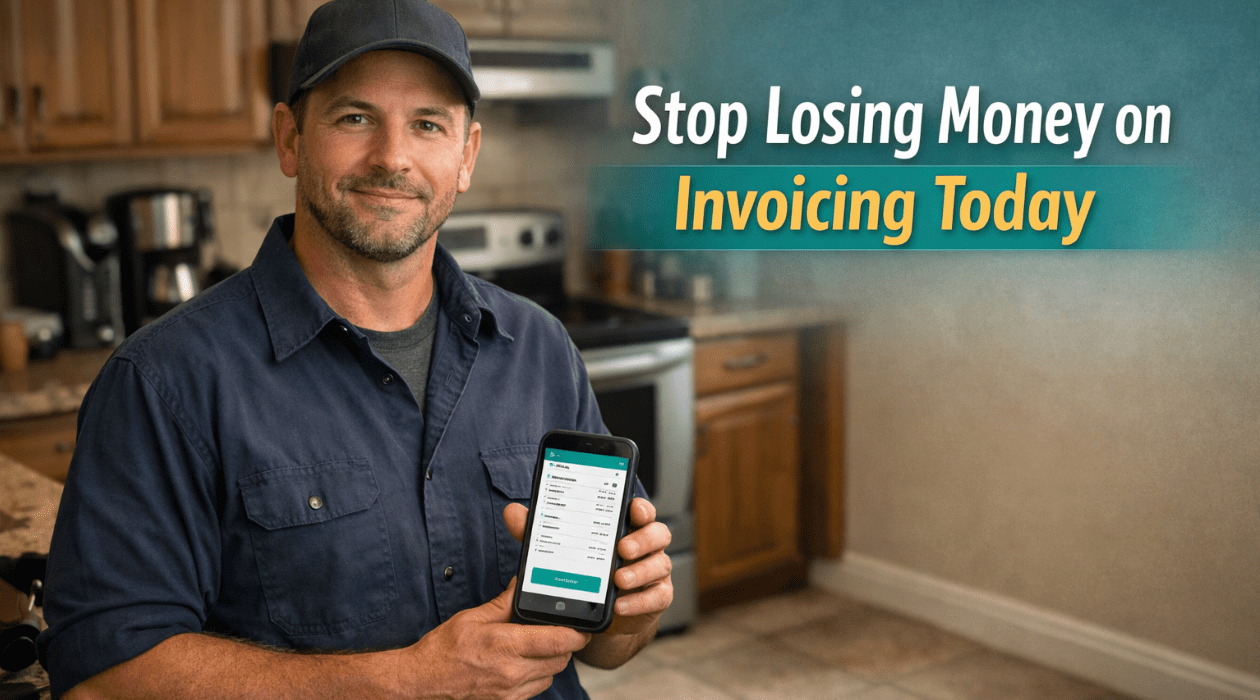
Stop Losing Money on Invoicing Today
Every day you continue with inefficient appliance repair invoicing is another day of lost revenue, delayed payments, and unnecessary stress. The solution doesn’t require massive investment or months of implementation. You can start reclaiming your time and money this week.
Your Remote Office Space (YROS) specializes in helping appliance repair businesses streamline their repair business billing without the overhead of full-time staff. Our US-based team understands field service operations because we’ve worked with dozens of trade businesses facing the same invoicing challenges you’re experiencing right now.
We handle everything from invoice creation and payment processing to follow-ups and financial reporting. You stay focused on repairs while we ensure your invoicing for appliance repair runs smoothly, professionally, and profitably. No contracts, no minimums, just flexible support that scales with your business.
Ready to see what $35,000-40,000 in recovered revenue could do for your business? Contact YROS today for a free consultation. We’ll review your current invoicing process, calculate your actual costs, and show you exactly how much time and money you’ll save with professional administrative support.
Your appliances aren’t going to fix themselves, and neither will your invoicing problems. But unlike appliance repairs, this is one problem you don’t have to solve yourself. Let’s talk about getting you back to what you do best while we handle the paperwork that’s holding you back.
Related Blog Posts:
- Eliminating Duplicate Data Entry: 5 Crucial Tips for Profit
- QuickBooks Management for Contractors: When to Outsource Your Books
- Billable Hours: 1 Vital Secret to Stop Lethal Costs
- Cost of DIY Administration: 3 Bold Masterful Joys
- What’s Your Time Actually Worth? A Reality Check for Business Owners