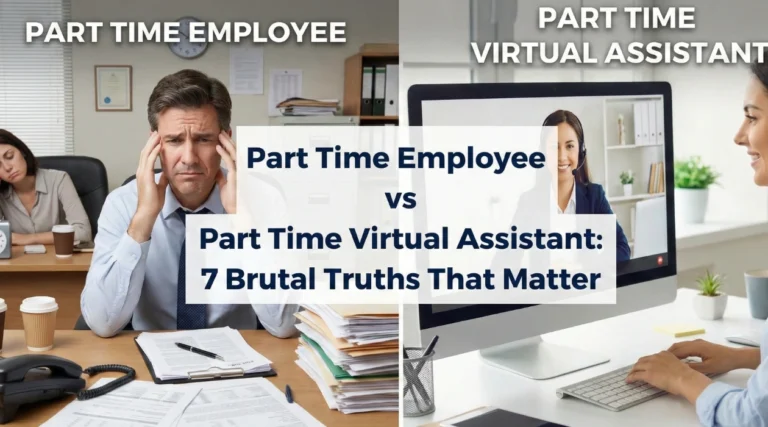
Hiring Your First Employee: When Your Business Is Too Small for an Employee But Too Big to DIY
You know the feeling. You’re booked solid. Your phone won’t stop ringing. You’re turning down work because there aren’t enough hours in the day. The invoices are piling up. The emails are multiplying. And you’re thinking about hiring your first employee.
But here’s the brutal truth: hiring your first employee is probably the wrong move right now.
Not because you don’t need help. You absolutely do. But because hiring your first employee comes with a price tag that most small business owners don’t fully understand until they’re buried in it. We’re talking about way more than just salary. We’re talking about taxes, benefits, training time, management overhead, and the suffocating responsibility of keeping someone employed even when business slows down.
There’s a reason you’re stuck in this awkward middle ground. You’re too busy to do everything yourself, but hiring your first employee feels like a massive financial leap you’re not sure you can afford. The good news? You’re not wrong to hesitate. The better news? There’s a smarter path forward.
The Trap of Hiring Your First Employee Too Soon
Let’s talk about what hiring your first employee actually costs.
You see a job posting for an administrative assistant at $40,000 per year. You think, “I can swing that.” But that $40,000 is just the starting line. By the time you factor in payroll taxes (7.65% for FICA alone), workers’ compensation insurance, unemployment insurance, potential health benefits, paid time off, and the software you’ll need to manage all of this, you’re looking at closer to $50,000 to $55,000 annually.
That’s $4,200 to $4,600 per month. Every single month. Whether business is booming or slow. Whether they’re fully trained or still learning your systems. Whether you have work for them to do or not.

Now add the hidden costs. The time you’ll spend training them. The time you’ll spend managing them. The time you’ll spend fixing their mistakes while they learn. Most employees take six to nine months to become fully productive. During that period, you’re paying full salary for partial output. You’re also still doing a chunk of the work yourself because you can’t fully hand things off yet.
This is where hiring your first employee becomes a trap. You thought you were buying back your time. Instead, you’ve bought yourself a second job: being a manager. You went from doing the work to teaching someone else how to do the work while still doing most of the work yourself.
Sound familiar?
When You Think You’re Ready for Hiring Your First Employee
Here’s what most business owners tell themselves when they start thinking about hiring your first employee:
“I’m working 60-hour weeks.”
“I’m missing my kid’s baseball games.”
“I can’t keep up with the phones and the emails.”
“I’m turning down jobs because I’m maxed out.”
All of those are valid problems. But hiring your first employee isn’t necessarily the right solution.
The question isn’t whether you’re busy. The question is whether your business can financially sustain hiring your first employee while maintaining profitability. The rule of thumb? Your business should be generating three to four times your potential employee’s monthly salary in consistent revenue before you even think about hiring your first employee.
If you’re looking at a $40,000 annual salary ($3,333 per month), you should be bringing in $10,000 to $13,000 per month in revenue consistently. Not one good month. Not seasonal spikes. Consistently.
Why such a high multiple? Because hiring your first employee doesn’t just add their salary to your expenses. It adds complexity, overhead, and financial risk. You need cushion. You need runway. You need the ability to weather a slow month without panicking about making payroll.
Most small business owners thinking about hiring your first employee don’t have that cushion yet. They’re busy, yes. They’re overwhelmed, absolutely. But they’re not financially ready for the commitment of hiring your first employee.
The Hidden Expenses Nobody Warns You About
Let’s get specific about what hiring your first employee actually looks like in year one.
Base Salary: $40,000
Payroll Taxes (FICA, Federal Unemployment, State Unemployment): $3,500 to $4,000
Workers’ Compensation Insurance: $800 to $2,500 (varies wildly by state and industry)
Health Insurance (if offered): $5,000 to $8,000 per year for employer contribution
Paid Time Off: Assuming two weeks, that’s $1,538 in paid non-working time
Payroll Software/Processing: $500 to $1,200 annually
Training Time (your billable hours spent training): Let’s say 40 hours at $75/hour = $3,000
Onboarding Costs (equipment, software licenses, uniforms): $500 to $1,500
Recruitment Costs (job postings, background checks): $200 to $500
Add it up. You’re looking at $54,000 to $61,700 for that “$40,000 employee” in year one. And that’s assuming everything goes smoothly. That’s assuming they work out. That’s assuming you don’t have turnover and have to start over.
Hiring your first employee isn’t just expensive. It’s a massive financial commitment that doesn’t come with a trial period or an easy exit ramp.

Why Hiring Your First Employee Might Be Premature
Here’s what business owners don’t consider when they’re desperate and thinking about hiring your first employee: you might not need a full-time person. You might just need help with specific tasks at specific times.
Think about your actual workload. If you’re an HVAC contractor, you don’t need someone answering phones at 6 PM when calls have stopped. If you’re a consultant, you don’t need administrative help on weekends. If you’re a plumber, you don’t need full-time dispatching during your slow season.
But when you commit to hiring your first employee, you’re paying for full-time whether you need full-time or not.
This is the part that kills profitability. You’re paying for 40 hours per week (2,080 hours per year) when you might only need 15 to 20 hours of actual support. You’re paying for someone to sit idle during slow periods. You’re paying for lunch breaks and coffee runs and bathroom breaks and the inevitable distractions that come with having someone physically in your space.
Hiring your first employee made sense in 1985 when remote work wasn’t an option and outsourcing meant sketchy overseas call centers. But it’s 2026. The landscape has changed. You have options that didn’t exist even five years ago.
The YROS Alternative to Hiring Your First Employee
This is where YROS changes the calculation entirely.
Instead of hiring your first employee and committing to $50,000+ per year in fixed costs, you get access to professional remote administrative support for a fraction of the price. We’re talking about trained, experienced administrative professionals who can answer your calls, manage your schedule, handle your dispatching, process your invoices, and manage your inbox without you having to pay for benefits, payroll taxes, or downtime.
No recruitment process. No training period where you’re paying full salary for partial productivity. No management overhead. No worries about what happens when business slows down or when they call in sick or when they take vacation.
You get the support you need, when you need it, without the financial anchor of hiring your first employee before you’re ready.
Let’s talk specifics. When you’re thinking about hiring your first employee to handle phones and scheduling, you’re imagining paying someone to sit at a desk from 8 AM to 5 PM, five days a week. That’s 40 hours weekly. But how many calls are you actually getting? If you’re a pest control company, maybe you get 20 to 30 calls per day during peak season and 10 during the off-season. Those calls average five to seven minutes each.
Do the math. That’s 100 to 210 minutes of actual phone time during a busy day. That’s 1.5 to 3.5 hours of actual work. But you’re paying for eight hours. You’re paying someone to sit there and wait for the phone to ring.
YROS eliminates that waste. You get professional call handling without paying for the idle time. Your calls get answered. Your customers get taken care of. And you’re not burning money on unproductive hours.
This is why hiring your first employee often doesn’t make financial sense when you’re in that “too small for an employee, too big to DIY” zone. You don’t need a full-time person. You need smart, flexible support that scales with your actual workload.
In the Wild: The $60,000 Mistake
Meet Jake. He runs a small electrical contracting business in the St. Louis Metro Area. Three years in, things were going well. He was booked out two to three weeks. He was working 55-hour weeks. And he was missing calls because he was on job sites.
Jake decided it was time. He started the process of hiring your first employee. He posted the job, did interviews, and brought on Sarah as his office manager at $38,000 per year.
Month one was rough. Jake spent 30 hours training Sarah on his systems, his software, and his processes. That’s 30 hours he wasn’t billing. At his rate of $95 per hour, that’s $2,850 in lost revenue right there.
Month two, Sarah was handling things okay, but she wasn’t fast. She was making mistakes with scheduling that Jake had to fix. She was uncertain about how to handle customer complaints. She needed constant guidance.
Month three, business slowed down. Winter hit. Call volume dropped by 40%. Jake was still paying Sarah’s full salary, but there wasn’t enough work to keep her busy. She was on Facebook. She was reorganizing file cabinets that didn’t need organizing. She was doing busy work because there wasn’t enough real work.
By month six, Jake had spent over $30,000 on salary and taxes alone, plus the lost billable hours training her, plus the mistakes she’d made that cost him a couple of customers. And here’s the kicker: he still couldn’t fully step away. He was still answering evening calls. He was still checking in constantly. He’d added an expense without actually buying back his time.
Jake thought hiring your first employee was the answer. What he really needed was flexible, professional support that could handle his peak times without the overhead of a full-time salary during the slow times.
By the time Jake called YROS, he’d burned through nearly $35,000 and was seriously considering letting Sarah go. The guilt was eating him alive. He’d hired someone. He’d made a commitment. And now he was realizing it was the wrong move at the wrong time.

The Real Numbers: Hiring Your First Employee vs. YROS
Let’s put this in black and white.
Hiring Your First Employee (Annual Cost):
- Base salary: $40,000
- Payroll taxes: $3,500
- Workers’ comp: $1,500
- Health insurance contribution: $6,000
- PTO (2 weeks): $1,538
- Payroll processing: $800
- Training time (your lost billable hours): $3,000
- Equipment/software: $1,000
- Total: $57,338
YROS Remote Office Support (Annual Cost):
- Monthly service fee for comprehensive admin support: Let’s say $1,800/month
- Total: $21,600
That’s a difference of $35,738 per year. That’s not chump change. That’s a new truck. That’s a vacation you’ve been putting off for three years. That’s marketing budget. That’s reinvestment in your business.
And here’s what you’re not calculating when you think about hiring your first employee: the opportunity cost. When you’re spending 30 to 40 hours training someone, that’s 30 to 40 hours you’re not billing. When you’re managing someone, that’s mental energy and time you’re not spending on revenue-generating activities. When you’re worrying about making payroll during a slow month, that’s stress that affects your decision-making.
YROS eliminates all of that. You get experienced administrative support that requires zero training time because they already know the systems. You get professional call handling without the management overhead. You get flexibility that scales with your business without the guilt of hiring your first employee and then having to let them go when things slow down.
What You Actually Need Instead of Hiring Your First Employee
Here’s the truth most business owners don’t want to hear: you don’t need an employee. You need specific tasks handled by someone who knows what they’re doing.
You need someone to answer your phones professionally. You need someone to schedule your appointments without double-booking. You need someone to send out invoices and follow up on unpaid ones. You need someone to manage your inbox so you’re not drowning in emails at 10 PM.
You don’t need someone sitting in your office scrolling through Instagram during slow times. You don’t need the liability of employment. You don’t need the complexity of payroll taxes and workers’ comp and HR compliance.
When you’re thinking about hiring your first employee, you’re trying to solve a legitimate problem with an outdated solution. The problem is real: you need help. The solution is wrong: hiring your first employee before you’re financially ready and before you actually need a full-time person.
YROS solves the actual problem without creating new ones. You get professional administrative support that handles the boring but essential stuff. Your calls get answered. Your schedule stays organized. Your invoices go out on time. Your customers get taken care of. And you get back to doing the work that actually makes you money.
This is why smart business owners are rethinking the traditional path of hiring your first employee as soon as things get busy. They’re realizing that hiring your first employee is a massive commitment that often happens too soon, costs more than expected, and doesn’t actually solve the core problem of needing flexible, reliable support.
The Management Tax Nobody Talks About
Let’s talk about something that catches every business owner off guard when they’re thinking about hiring your first employee: the management tax.
You think you’re hiring someone to take work off your plate. What actually happens is you add a new job to your list: manager. And being a manager is time-consuming, mentally draining work that doesn’t directly generate revenue.
Someone needs to review their work. Someone needs to answer their questions. Someone needs to mediate when they have a conflict with a customer or a vendor. Someone needs to handle their schedule when they’re sick or need time off. Someone needs to conduct performance reviews and have awkward conversations when they’re not meeting expectations.
That someone is you.
When you’re considering hiring your first employee, you’re imagining handing off tasks and walking away. The reality is you’re adding an entire layer of responsibility that you’ve never had before. You’re now responsible for someone else’s livelihood. You’re now legally obligated to follow employment laws. You’re now vulnerable to lawsuits if you mess up termination or create a hostile work environment or violate wage and hour laws.
This is the part of hiring your first employee that nobody explains until you’re living it. It’s not just about the money. It’s about the weight of responsibility. It’s about the mental load of managing another human being. It’s about the complexity that comes with employment relationships.
YROS removes that entire layer. You’re not an employer. You’re a client. You have a service agreement, not an employment relationship. You have clear expectations and deliverables, not the murky dynamics of boss-employee relationships. If something isn’t working, you have a conversation with a service provider, not a termination meeting that could end in legal action.
The psychological relief of not being someone’s boss is worth considering when you’re thinking about hiring your first employee. You already have enough on your plate. Adding “manager” to your job description might push you over the edge.
When Hiring Your First Employee Actually Makes Sense
Look, we’re not saying hiring your first employee is always wrong. There are absolutely scenarios where hiring your first employee is the right move.
If you’re consistently generating three to four times the salary in monthly revenue, and that revenue is stable and predictable, hiring your first employee starts to make sense. If you have enough work to keep someone busy 40 hours per week year-round, hiring your first employee might be justified. If you’ve already optimized your systems and processes and you still can’t keep up, hiring your first employee could be the right next step.
But here’s the thing: most business owners thinking about hiring your first employee aren’t actually at that point yet. They’re busy, yes. They’re overwhelmed, absolutely. But they’re not financially stable enough or operationally ready enough to take on the massive commitment of hiring your first employee.
The better path is to get support first, optimize your operations, stabilize your revenue, and then consider hiring your first employee when you’ve actually outgrown the flexible support model. Use YROS to handle the administrative load while you focus on growth. Then, when you’ve hit that consistent revenue multiple and you have proven, sustained demand for full-time help, hiring your first employee becomes a smart, strategic decision instead of a desperate leap.
FAQ: The Hard Questions About Hiring Your First Employee
Q: Isn’t hiring your first employee a sign that my business is successful?
No. Hiring your first employee is a sign that you’ve taken on a significant financial commitment. Success is measured by profitability, not headcount. Plenty of businesses stay lean, stay profitable, and scale without ever hiring your first employee the traditional way.
Q: Won’t I lose control if I don’t have someone in-house?
This is backwards. When you use YROS, you actually have more control because you have clear expectations, defined deliverables, and professional accountability without the complicated dynamics of being someone’s boss. You’re not managing personalities or mediating conflicts. You’re directing work and getting results.
Q: What if hiring your first employee is cheaper in the long run?
It’s not. When you add up the real costs of hiring your first employee (salary, taxes, benefits, training time, management overhead, equipment, and the opportunity cost of your time spent managing instead of billing), it’s significantly more expensive than professional remote support. The math isn’t close.
Q: How do I know when I’m actually ready for hiring your first employee?
You’re ready when you’re consistently generating three to four times the monthly salary in revenue, when you have enough work to keep someone busy 40 hours per week year-round, and when you’ve already optimized your operations with support like YROS and still can’t keep up. That’s when hiring your first employee transitions from risky move to smart growth strategy.
Q: What if I’ve already started the process of hiring your first employee?
Stop. Seriously. If you’re not 100% confident in the financial stability and operational necessity of hiring your first employee, pause and explore the alternative. It’s much easier to not hire someone than it is to hire someone and then realize you can’t afford to keep them.

The Bottom Line on Hiring Your First Employee
You’re in the awkward middle. You need help, but hiring your first employee feels like too big of a leap. Your instinct is right.
Hiring your first employee before you’re financially and operationally ready is one of the most expensive mistakes small business owners make. It’s not about being cheap. It’s about being smart. It’s about recognizing that the business landscape has changed and the old playbook of hiring your first employee as soon as you get busy doesn’t apply anymore.
You have options now. You can get professional, reliable administrative support without the overhead, the risk, and the complexity of hiring your first employee. You can scale your support up or down based on your actual workload instead of committing to 40 hours per week whether you need it or not.
YROS gives you what you actually need: someone to answer your phones, manage your schedule, handle your dispatching, process your invoices, and take care of the administrative work that’s drowning you. You get all of that without payroll taxes, without benefits, without training time, and without the suffocating responsibility of being someone’s employer before you’re ready.
Stop trying to force hiring your first employee to make sense when your business isn’t there yet. Get the support you need now. Grow your revenue. Stabilize your operations. And then, if and when hiring your first employee actually makes sense, you’ll be in a position to do it right instead of doing it desperately.
You don’t need to be someone’s boss to get help. You just need to be smart about where that help comes from.
Ready to skip the expense and headache of hiring your first employee? Let’s talk about how YROS can give you the support you need without the commitment you can’t afford. Schedule a 30-minute call and let’s figure out what you actually need.
Relate Blogs:
- New Hire Expenses: 9 Shocking Traps for Small Business
- Virtual Assistant vs Employee: 5 Vital Bold Wins
- In-House Admin vs Virtual Support: 5-Year Cost Comparison
- Do You Need Office Space Before You Hire an Employee?
- Breaking Even on Virtual Assistants: 3 Real Facts on Gaps
- Management Tax: 3 Brutal Costs Of Failing Cleaning Ops
- Performance Reviews for Small Teams: Keeping It Simple
- Giving Constructive Feedback Without Micromanaging
- Can You Fire a Virtual Assistant Easier Than an Employee?
- What Tasks Should You Never Delegate?
- The First 5 Things to Delegate When You’re Overwhelmed
- Billable Hours: 1 Vital Secret to Stop Lethal Costs
- Cost of DIY Administration: 3 Bold Masterful Joys
- Admin Profit Margin Leak: 5 Shocking Brutal Truths
- What’s Your Time Actually Worth? A Reality Check for Business Owners
- HVAC Scaling: 4 Proven Ways to Grow Massive Revenue
- Missed Calls: 7 Shocking Facts About Costly Revenue Leak
- Windshield Time vs Admin Time: Where Your Profit Is Actually Leaking
- Seasonal Slowdowns: Why Full-Time Payroll Can Sink Contractors
- The 2-Hour Response Rule for Contractor Estimates
- Starting With a VA and Transitioning to an Employee: A Roadmap
- When to Hire Your First Operations Person (And When to Wait)
- From Solopreneur to CEO: Mindset Shifts That Matter
- Building a Business That Runs Without You (Even for a Week)
- Scaling systems: 6 proven powerful wins for massive growth
- Domestic Support: 3 Brutal Vital Differences
- Industry-Specific Virtual Assistants: Generalist or Specialist?
- Managed Office Help: 5 Powerful, Proven, Bad Mistakes to Avoid
- How to Budget for Virtual Assistant Services
- Calculating ROI on Your Virtual Assistant Investment
- Metro East Office Support: 4 Essential Smart Comparisons
- Why St. Louis Small Businesses Choose Local Virtual Assistants
- St. Louis Contractor Remote Support: 5 Essential Smart Tips